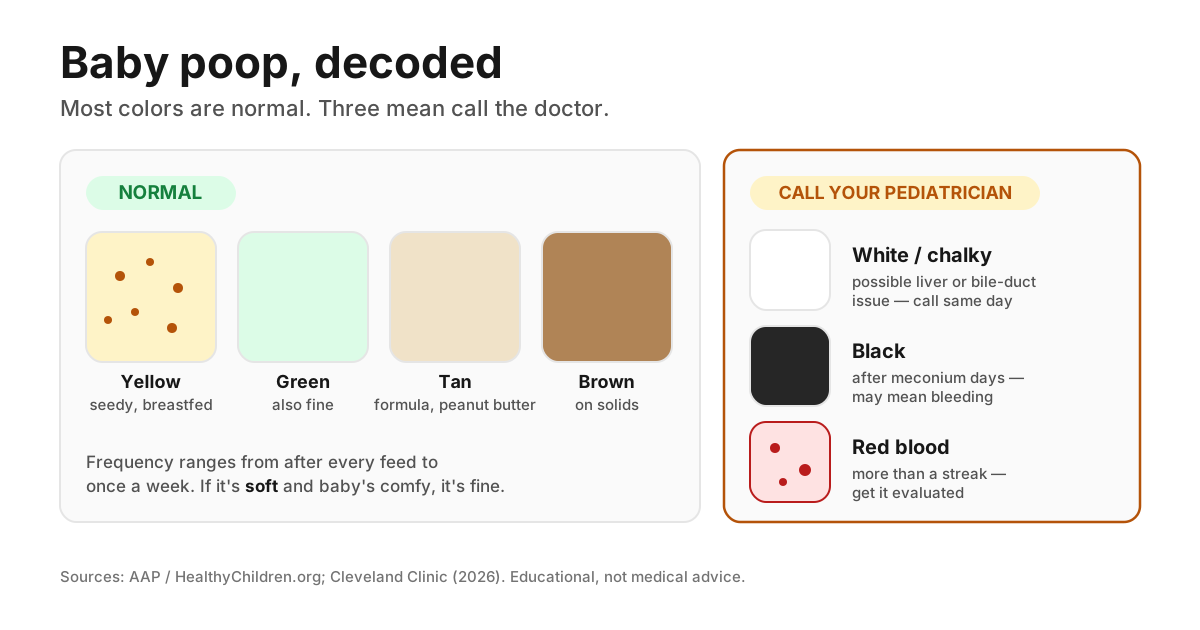
At some point in the first month of parenthood, you will find yourself standing over a changing table at 3 a.m., phone flashlight on, squinting at a diaper and asking the universe: is that color a problem? You are not alone, and you are not strange. Newborn poop is genuinely confusing, it changes constantly, and almost none of it is an emergency.
Here is the reassuring headline: the overwhelming majority of baby poop colors are normal, even the ones that look alarming. Only three colors actually warrant a call to your pediatrician. Let's sort the normal rainbow from the real red flags, so you can put the flashlight down.
What the science says: the normal rainbow
A baby's stool tells the story of what's moving through their gut, and in the early months that story changes fast.
Meconium comes first. For the first few days, your baby passes meconium: a thick, sticky, black or dark-green tar-like substance that filled their intestines before birth. This looks dramatic but is completely expected. Once meconium clears, stools transition to yellow-green, per the American Academy of Pediatrics.
Then it depends on how baby eats. The AAP describes two typical looks:
- Breastfed babies tend to have soft, loose, even runny stools that are mustard-yellow and seedy, with little flecks that genuinely resemble seeds. This is normal and means the milk is doing its job.
- Formula-fed babies pass firmer stools, about the consistency of peanut butter or soft clay, in shades of tan to yellow or pasty brown.
Green is fine. A greenish tinge is normal and usually just reflects how quickly things passed through or a little extra bile. The most common normal colors, per Cleveland Clinic, land somewhere in the brown-tan-yellow-green family. Brown gets its color from bile and bilirubin (the same pigment involved in newborn jaundice), which is why the palette shifts as your baby's digestion matures.
Then solids change everything. Around 6 months, when food enters the picture, expect stools to get thicker, browner, smellier, and far more variable. You will also, eventually, meet the undigested-pea phase. Whole foods can pass through looking remarkably whole. That is not a digestion failure; little ones just don't chew much yet.
Frequency: the wide, weird, normal range
Parents worry about color, but they worry about frequency almost as much, and here the normal range is enormous.
Many newborns poop after most feeds in the early days. After that, the AAP notes a big split:
- Formula-fed babies typically go at least once a day.
- Breastfed babies are the wild cards. After the first 3 to 6 weeks, some breastfed babies poop after every single feeding, and others go up to a week between bowel movements. Both can be perfectly normal, as long as the stool stays soft and the baby is comfortable.
The key word is soft. Frequency matters far less than consistency and comfort.
Is it constipation, or just newborn drama?
Babies look like they're working hard to poop, complete with red faces, grunting, and crying, and most of the time that's just normal newborn straining, not constipation. As the AAP puts it, infants "normally work really hard to have a bowel movement, so straining at the stool isn't necessarily alarming, even when the infant cries."
True constipation shows up as hard, dry, pellet-like stools, sometimes with a little blood from a small tear, and a baby who seems genuinely uncomfortable rather than just theatrical. For babies over a month old who are constipated, the AAP suggests small amounts of apple or pear juice (about 1 ounce per month of age, up to 4 ounces) and, once solids have started, more fruits, vegetables, and prunes. Hard stools that don't respond, or any blood, are worth a call. We go deeper on this in our guide to constipation, gas, and colic.
The three colors that mean call the doctor
Now the part you came for. Reassurance is the rule, but these three colors are genuine exceptions. If you see them, call your pediatrician.
1. White, chalky, or clay-colored
This is the most important one to know. Pale, white, gray, or clay-colored stool can signal that bile isn't reaching the intestine, which points to a possible liver or bile-duct problem, per Cleveland Clinic. In a young infant, this is the color that can flag a condition called biliary atresia, where early detection genuinely changes outcomes. White or chalky poop warrants a same-day call to your pediatrician.
2. Black (after the meconium days are over)
Black is expected in the first few days as meconium. But black, tarry stool that shows up later, once your baby is settled into yellow or tan poop, can mean blood from higher up in the digestive tract that has been partially digested. (One honest caveat: iron supplements and some foods can darken stool harmlessly.) When in doubt, call and describe it.
3. Red, with blood
A little bright red can come from a tiny tear around the anus from a hard stool, which is usually minor. But red blood in the stool should be evaluated by your pediatrician, especially if there's more than a streak, if the stool is also watery and frequent, or if your baby seems unwell. Don't try to diagnose the cause yourself; describe it and let them decide.
A quick, calming note on the impostors: green is not a red flag, seedy is not a red flag, and a faint streak of mucus now and then is usually fine. The three to act on are white, black, and bloody red.
When to seek help, beyond color
Color is one signal. Call your pediatrician if you also see:
- Diarrhea (watery, much more frequent stools) along with signs of dehydration: far fewer wet diapers, no tears when crying, a dry mouth, or unusual sleepiness. Dehydration is the real risk with a stomach bug, and it's covered in depth in our stomach bugs and dehydration playbook.
- Persistent mucus or blood, not just an occasional fleck.
- Hard, pellet stools that don't improve, or a baby who seems to be in real pain.
- Any white, chalky, black, or bloody-red stool, as above.
And of course, in a young baby, fever changes the calculus on everything. If your baby is under 3 months with a rectal temperature of 100.4°F (38°C) or higher, that's its own emergency regardless of what the diaper looks like; see newborn fever: when to worry.
If tracking diaper output helps you feel less like you're guessing in the dark, you can log feeds, wet diapers, and dirty diapers in the TinyWins app, which makes it much easier to answer the "wait, when did they last poop?" question your pediatrician will inevitably ask.
The bottom line
Newborn poop is a moving target, and the normal range is far wider than it feels at 3 a.m. Yellow, green, tan, brown, seedy, runny, firm: all normal. Frequency from "after every feed" to "once a week" can be normal in a thriving breastfed baby. The only three colors that should send you to the phone are white or chalky, black (after meconium), and red with blood. Everything else, you can almost always wipe, change, and move on with your night.
This article is educational and not medical advice. Always check with your pediatrician/provider.