Everyone prepares you for labor. Almost no one prepares you for the weeks after — the bleeding that comes in waves, the first terrifying trip to the bathroom, the cramps that hit hardest while you nurse, and the strange new job of recovering from major physical events while keeping a tiny human alive on no sleep. This guide covers what's normal, what isn't, and the short list of warning signs worth memorizing before you're foggy and exhausted at home.
We'll keep the tone light where we can. But postpartum warning signs are one of the places where we drop the jokes entirely: most pregnancy-related deaths happen after delivery, and more than 80% are preventable when someone acts in time, according to the CDC. Knowing the red flags is one of the highest-leverage things you can do for yourself.
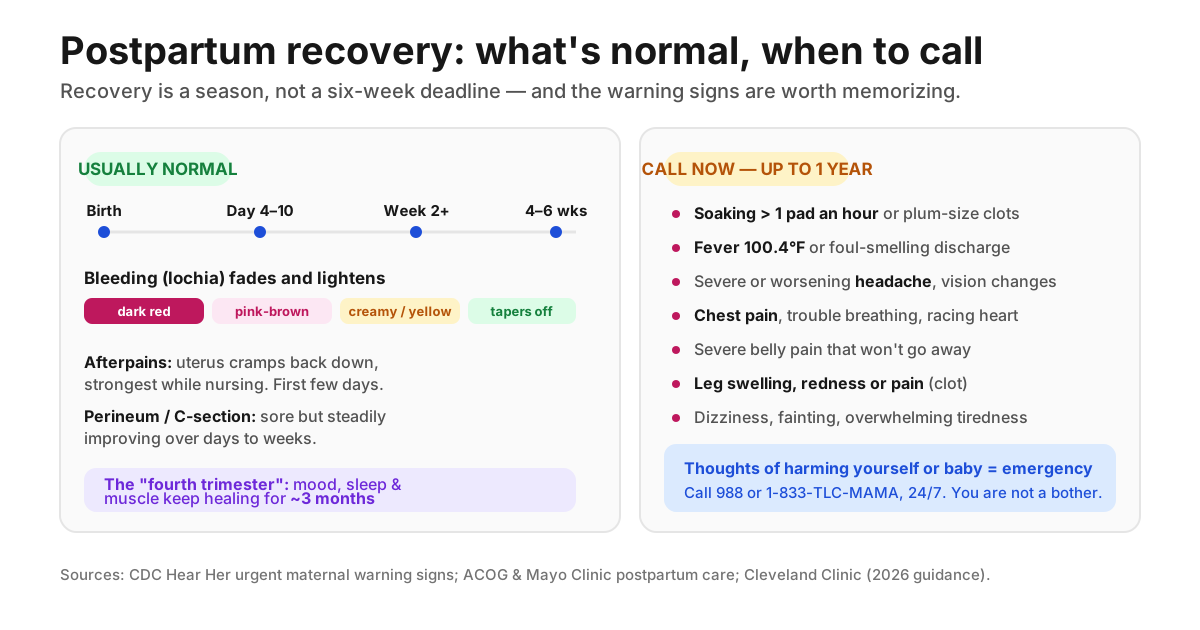
What the science says: recovery is a season, not a six-week deadline
Your body spent months building and birthing a baby. Undoing that takes longer than the calendar suggests. The uterus shrinks back to roughly its pre-pregnancy size over about six weeks, and normal bleeding usually stops in that same four-to-six-week window, per Cleveland Clinic. But pelvic floor strength, abdominal muscle tone, hormones, sleep, and mood often take months to settle.
That's why obstetricians now frame the first three months as the "fourth trimester" and treat postpartum care as an ongoing process rather than a single visit. ACOG recommends contact with your provider within the first few weeks — not just the old single six-week checkup — because problems (bleeding, blood pressure, mood, healing) can surface at any point in that window. If something feels off at week three, you don't have to wait until week six to be heard.
The normal stuff (that nobody warns you about)
Bleeding (lochia)
Vaginal bleeding after birth, called lochia, is normal whether you delivered vaginally or by C-section. It follows a fairly predictable arc, per Cleveland Clinic:
- Days 1–3: dark red, possibly with small clots up to the size of a plum.
- Days 4–10: lighter, watery, pink to brownish.
- Week 2 onward: creamy or yellowish, tapering off by four to six weeks.
Expect a temporary gush when you stand up in the morning, after activity, or while breastfeeding — that's pooled blood, not a new problem. What's not normal: soaking more than one pad an hour, clots bigger than a plum, or bright-red bleeding that returns after it had faded. Those are call-now signs (more below).
Afterpains
Those period-like cramps in the first days are your uterus contracting back down and clamping off the blood vessels where the placenta was attached. They're often most intense while breastfeeding (nursing releases oxytocin, which drives the contractions) and tend to be stronger with each subsequent baby, per Cleveland Clinic. Uncomfortable, but a sign things are working.
Perineal and C-section healing
If you had a vaginal birth, the perineum (and any tear or episiotomy) is sore for days to weeks. Ice, a peri bottle of warm water, sitz baths, and a stool softener are your friends. If you had a C-section, remember it's abdominal surgery: you're healing an incision and recovering internally, so lifting limits and incision care matter. ACOG covers practical pain management for both. Healing should be steadily improving — pain that escalates instead of easing is worth a call.
The rest of the fourth-trimester package
Night sweats, hair shedding, leaky breasts, constipation, swelling that gets briefly worse before it gets better, and emotions that swing without warning are all common. None of that means something is wrong. Mayo Clinic has a thorough rundown of expected postpartum changes and self-care.
Baby blues versus something more
In the first two weeks, weepiness, mood swings, irritability, and feeling overwhelmed are extremely common — the "baby blues" affect most new mothers and usually lift on their own as hormones settle.
What's different: if low mood, anxiety, hopelessness, trouble sleeping (beyond the obvious newborn reason), or difficulty bonding lasts longer than two weeks or interferes with daily life, that may be postpartum depression or anxiety — which is common, not a character flaw, and very treatable, per ACOG. Partners can experience it too. You don't need to hit a crisis to deserve help; raising it early at any visit is exactly the right move.
Any thought of harming yourself or your baby is an emergency. Call or text 988 (Suicide & Crisis Lifeline) or the free, confidential National Maternal Mental Health Hotline at 1-833-TLC-MAMA (1-833-852-6262), available 24/7 in English and Spanish. There is no version of this where reaching out is an overreaction.
When to seek help: the urgent maternal warning signs
This is the list to memorize — or screenshot. The CDC's Hear Her campaign distilled the urgent maternal warning signs that mean get medical care right away, and crucially, they apply during pregnancy and for up to one full year after delivery. Per the CDC, seek care now for any of these:
- Headache that won't go away or gets worse over time
- Dizziness or fainting
- Changes in your vision
- Fever of 100.4°F (38°C) or higher
- Extreme swelling of your hands or face
- Trouble breathing
- Chest pain or a fast-beating heart
- Severe nausea and vomiting
- Severe belly pain that doesn't go away
- Heavy vaginal bleeding or discharge after birth — including soaking more than one pad in an hour or passing clots larger than a plum
- Swelling, redness, or pain in your leg or arm (a possible blood clot)
- Overwhelming tiredness
- Thoughts of harming yourself or your baby
Two more from March of Dimes worth flagging, because they signal infection or sepsis: foul-smelling vaginal discharge, or redness, pus, or worsening pain at a perineal tear or C-section incision; and feeling suddenly cold, clammy, confused, or "wrong" in a way that's hard to describe. Trust that instinct — it's data.
The single most important rule: you are the expert on your own body. If something feels seriously off, say so clearly and ask to be evaluated, even if you were told you're fine. The Hear Her campaign exists precisely because warning signs are too often brushed aside. Nurses developed the AWHONN POST-BIRTH program for the same reason — so new parents and caregivers can name what they're seeing and get a fast response.
Below is one mother's account of how quickly a postpartum complication can escalate and why speaking up matters — a short, real story from the CDC's campaign.
Making recovery a little easier
A few things that genuinely help in the fourth trimester:
- Lower the bar on everything except healing and feeding. The laundry can wait. Recovery is the assignment.
- Line up your warning-sign plan before discharge. Save your provider's after-hours number, and tell whoever is with you what to watch for, so they can act if you can't.
- Don't skip the postpartum visit(s) — and ask for an earlier one if anything worries you. ACOG explicitly supports ongoing contact, not a single gate at six weeks.
- Track the basics. Jotting down bleeding changes, pain levels, mood, and feeds makes patterns obvious and gives your provider real information instead of a foggy guess. You can keep a simple postpartum-and-baby log in your TinyWins journal so it's all in one place when someone asks "how have things been?"
Recovery isn't linear, and "I feel like myself again" can take longer than anyone admits out loud. That's normal. What's not normal is suffering in silence through a warning sign because you didn't want to bother anyone — so when in doubt, make the call.
If your worry right now is the new baby rather than yourself, our guide to newborn fever and when to worry covers the one rule every new parent should know cold, and perinatal mood: baby blues, postpartum depression, and how to ask for help goes deeper on the emotional side of the fourth trimester.
This article is educational and not medical advice. Always check with your pediatrician/provider.