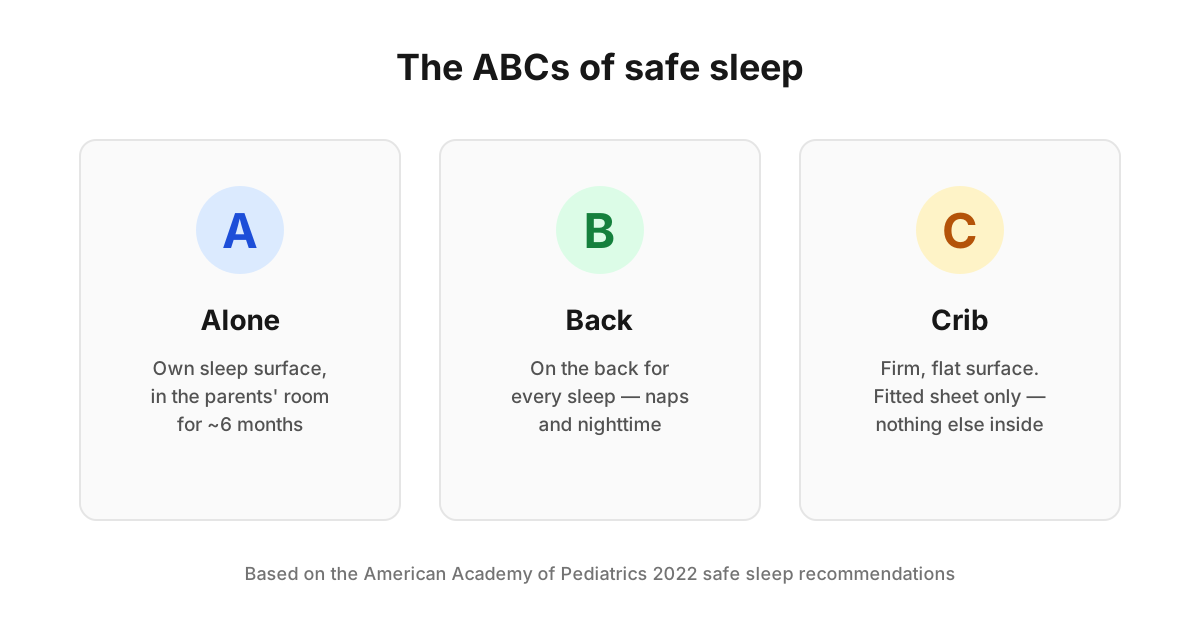
Safe sleep advice can feel like a long list of don'ts delivered at maximum volume. But underneath it is one simple framework — the ABCs: babies sleep safest Alone, on their Back, in a bare Crib. Every rule in the American Academy of Pediatrics' 2022 safe sleep policy hangs off those three letters.
Here's each one, plus the why — because rules are easier to follow at 3 a.m. when you know the reason behind them.
Why this matters
About 3,700 babies die of sleep-related causes in the US each year, including SIDS and accidental suffocation, according to the CDC. The encouraging part: rates fell dramatically after the "Back to Sleep" campaign launched in the 1990s, proof that these recommendations genuinely save lives. The full evidence base lives at the NIH's Safe to Sleep site.
A is for Alone
Your baby should sleep on their own sleep surface — but in your room.
- Room-share, don't bed-share. The AAP recommends keeping the crib or bassinet in the parents' room, ideally for at least the first 6 months. Room-sharing is associated with lower SIDS risk; adult beds, with their soft mattresses, pillows, and gaps, are not designed for infant sleep. See the AAP's parent guide to safe sleep.
- "Alone" means no people and no stuff. No co-sleeping adults, siblings, or pets on the same surface — and no pillows, blankets, bumper pads, or plush toys in it.
- The riskiest scenario is accidental. Falling asleep with a baby on a couch or armchair is dramatically more dangerous than any planned sleep arrangement, per NIH Safe to Sleep. If you're exhausted and might drift off while feeding, feed in your bed (cleared of pillows and bedding) rather than a sofa, and move the baby back to their crib when you wake.
B is for Back
Back to sleep — every sleep, every time, until age 1.
Side and stomach positions raise SIDS risk; the back position keeps the airway clearest. The AAP explains the evidence in Sleep Position: Why Back Is Best. Common worries, answered:
- "Won't my baby choke on spit-up?" No — healthy babies have airway reflexes that make choking on the back less likely, not more. This holds true even for most babies with reflux.
- "My baby rolls over now." Once your baby can roll both directions independently, you can leave them in the position they assume. Still always start sleep on the back.
- "My baby hates it." Many do at first. Consistency helps, and so does a pacifier at sleep time — pacifier use is associated with reduced SIDS risk in the AAP's recommendations.
A note on swaddling: it's fine for back-sleeping newborns if done correctly, but it must stop at the first sign of rolling. The AAP covers technique and timing in Swaddling: Is It Safe?
C is for Crib
A firm, flat, level surface that meets safety standards — and nothing else in it.
- Firm and flat means firm and flat. The mattress shouldn't indent under your baby's weight, and the surface shouldn't incline more than a hair. The AAP's 2022 policy explicitly recommends against inclined sleepers — products inclined more than 10 degrees are now banned from sale in the US under the Safe Sleep for Babies Act, along with padded crib bumpers.
- A fitted sheet is the only accessory. No positioners, no nests or loungers in the crib, no blankets. Dress your baby in a wearable blanket (sleep sack) if it's cold.
- Skip weighted products entirely. The AAP recommends against weighted swaddles, weighted sleep sacks, and weighted blankets for infants.
- Avoid overheating. One more layer than you're wearing is a good rule of thumb; no hats indoors during sleep.
- Sitting devices aren't beds. Car seats, swings, and bouncers are not for routine sleep — transfer your baby to a flat surface when you can.
A bassinet, play yard, or portable crib that meets CPSC standards counts as a "crib" here. Secondhand is fine if it's current-standard, undamaged, and has never been recalled.
Beyond the ABCs: the supporting cast
The AAP's full recommendations include a few factors beyond the sleep environment:
- Breastfeeding (any amount) is associated with reduced SIDS risk — though fed is best, and safe sleep rules apply equally to formula-fed babies.
- Keep the air smoke-free during pregnancy and after birth. Smoke exposure is a major modifiable risk factor.
- Prenatal care and immunizations are both associated with lower risk.
- Skip products that claim to "prevent SIDS" — including home cardiorespiratory monitors marketed for that purpose. None are proven, and they can lull caregivers into relaxing the basics.
Making it stick when you're exhausted
The hard truth: most unsafe sleep happens not from ignorance but from exhaustion at 4 a.m. A few things that help real families:
- Set up the environment once, correctly — bare crib in your room — so the safe choice is the default choice.
- Brief every caregiver. Grandparents may have raised babies under older guidance ("babies slept on tummies in my day!"). Share this article or the Safe to Sleep checklist kindly but clearly — naps with other caregivers are a common gap.
- Plan for the worst moment. Decide in advance what you'll do when you're falling asleep mid-feed.
Many parents find that logging sleep helps them notice when habits are drifting — you can track sleep stretches and milestones in your TinyWins journal.
For a one-minute refresher you can play for any caregiver, Mayo Clinic boils the essentials down here:
The reassuring math
Following the ABCs doesn't guarantee anything — nothing does — but it stacks every known modifiable factor in your baby's favor. Set it up once, make it routine, and then spend your worry budget elsewhere (there will be no shortage of candidates).
For what normal sleep actually looks like in the early weeks, read our newborn sleep survival guide. And when your baby is past the newborn stage and you're weighing your options, see sleep training methods, explained without the drama.
This article is educational and not medical advice. Always check with your pediatrician/provider.