Open any parenting app and you'll find the same skeleton: "Your baby at 4 months", "Week 32: what to expect". It's a natural way to organize content — and it quietly stresses parents out.
The problem with age-based content
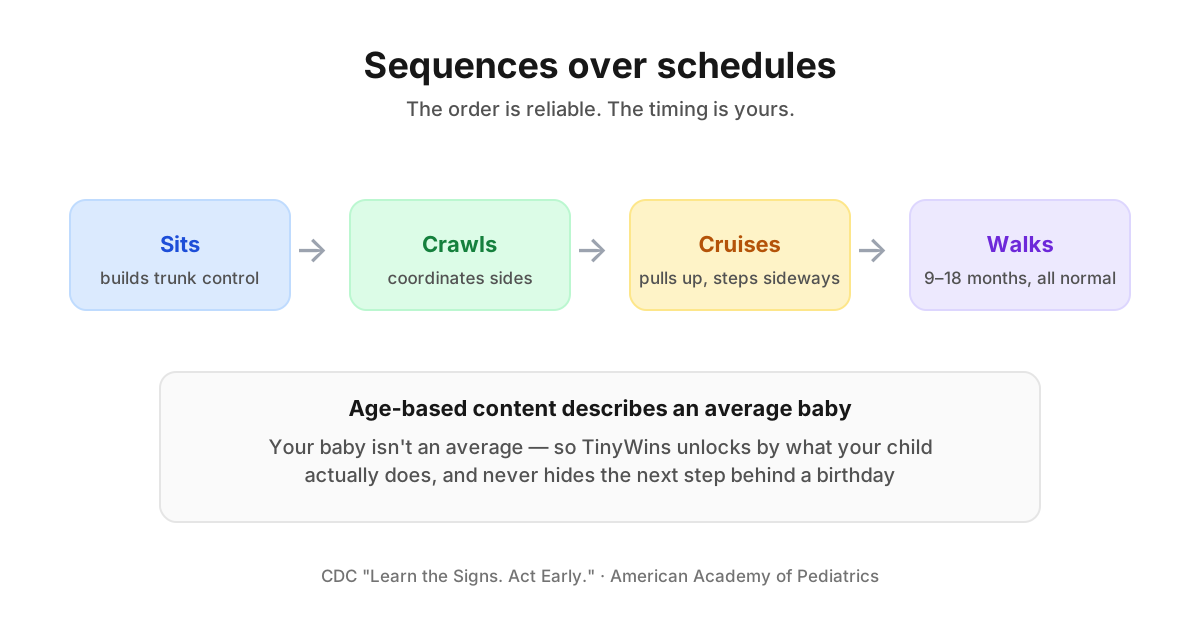
Age-based content describes an average child. But development isn't a train timetable; it's a sequence. The CDC's "Learn the Signs. Act Early." milestone checklists give ranges, not dates, because healthy children hit the same milestones months apart. Independent walking, for instance, normally begins anywhere from about 9 to 15 months — one baby walks early, another late, both perfectly on track.
When an app says "your baby should be rolling by now", three things happen:
- Parents of early movers stop reading — the content feels behind.
- Parents of late bloomers panic — the content feels like a verdict.
- Everyone misses content that's actually relevant right now.
Sequences over schedules
TinyWins flips the model. Your child's journey is a path of steps unlocked by milestones you check off — first smile, first words, first steps. When your toddler pulls up to stand, the cruising-to-walking content unlocks. Not because a calendar said so, but because your child said so.
Under the hood this is a rule engine: when milestones X and Y are achieved, unlock step Z, open the language track, or graduate the stage. Age labels still appear ("most babies by 2 months") because they're useful context — they're just never gates.
The CDC's "Learn the Signs. Act Early." team explains why watching milestones — rather than ages — is the developmental signal that matters:
Tiny wins, on purpose
We borrowed deliberately from language-learning apps: a visible path, small completable steps, streaks for showing up daily. Not because parenting is a game — because the first years are a blur, and a small, finishable unit of progress ("read one card, check one milestone") is exactly what a sleep-deprived brain can do at 11pm.
The win was always there. We just made it visible.