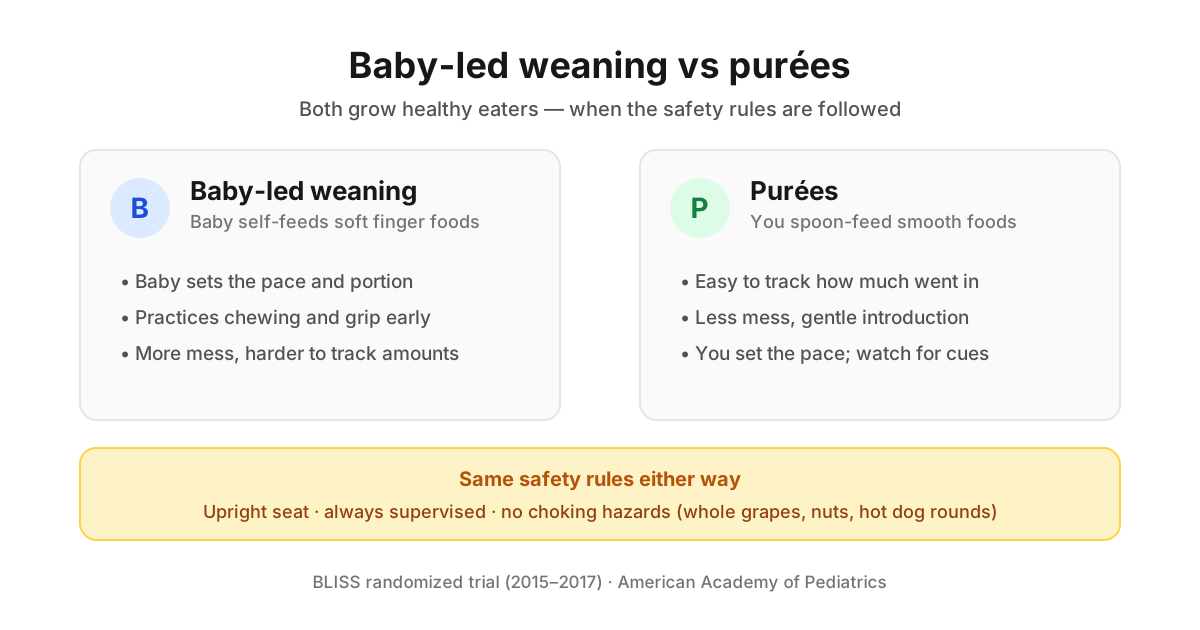
Somewhere around month five, every parent discovers that first foods come with a culture war attached. Team baby-led weaning (BLW) says skip the purées and let your baby self-feed real food. Team purée says start smooth and spoon-feed your way up.
Good news: this is one of the rare parenting debates where we have a proper randomized controlled trial. Spoiler — both approaches are fine, and the differences are smaller than the internet suggests.
First, definitions
- Traditional weaning: parent spoon-feeds purées, progressing gradually to mashed, lumpy, then finger foods.
- Baby-led weaning: from the start (~6 months), the baby self-feeds graspable pieces of soft food from the family meal. No spoon-feeding, no purées; the baby controls what goes in their mouth and how much.
Both start at the same time — around 6 months, when readiness signs appear — which we cover in detail in starting solids: when and how. The NHS weaning guidance explicitly supports offering finger foods from the start of weaning, alongside or instead of purées.
What the BLISS trial actually found
The strongest evidence comes from BLISS (Baby-Led Introduction to SolidS), a randomized controlled trial in New Zealand that assigned families to a modified baby-led approach (with safety and iron guidance) or usual care, then followed the babies.
On growth: the BLISS trial published in JAMA Pediatrics found no significant difference in body weight or risk of overweight at 12 and 24 months between the baby-led and traditional groups. The popular claim that BLW prevents obesity by teaching self-regulation is plausible-sounding but unproven.
On choking: the companion study in Pediatrics found that a baby-led approach with safety guidance did not increase choking compared with usual feeding. The sobering footnote: babies in both groups were frequently offered foods that are known choking hazards. The risk isn't the philosophy — it's the food list.
On iron: unmodified BLW raises a theoretical concern, because the easiest self-feed foods (steamed veg sticks, toast, fruit) are iron-poor exactly when iron needs spike around 6 months. BLISS addressed this by coaching families to offer an iron-rich food at every meal — a fix that works regardless of which approach you use.
Honest pros and cons
Baby-led weaning
Likely upsides: baby joins family meals from day one; exposure to varied textures early; baby fully controls pace and quantity (responsive feeding, which the AAP endorses in any approach); arguably less meal prep.
Honest downsides: spectacular mess; harder to eyeball how much was actually eaten; requires real discipline about iron-rich offerings and choking-safe food prep; not appropriate for babies with developmental delays affecting sitting or hand-to-mouth skills — ask your pediatrician first.
Purée-first
Likely upsides: easy to deliver iron-fortified cereal and meat purées; intake is visible; feels manageable for nervous first-time parents and for daycare settings.
Honest downsides: easy to slip into pressure-feeding ("here comes the airplane") — watch baby's full/hungry cues instead; textures must be deliberately progressed, since staying on smooth purées too long is associated with pickier eating later (a theme we revisit in picky eating in toddlers).
The safety rules that matter in BOTH camps
Whatever you feed, these are non-negotiable. The CDC's solid-foods guidance and NHS agree on the core list:
- Baby sits fully upright in a high chair — never reclined, never eating in motion
- An adult watches, always, within arm's reach
- Banned foods under 12 months: honey; cow's milk as a drink
- High-risk shapes at any approach: whole grapes and cherry tomatoes (quarter lengthwise), whole nuts, spoonfuls of nut butter, hard raw vegetables, popcorn, hot-dog coins
- Soft-cook and size appropriately: pieces should squish between your finger and thumb; early BLW pieces should be finger-length so baby can grip with a fist
- Learn the difference between gagging and choking. Gagging (red face, coughing, sputtering noise) is a normal protective reflex and very common early on. Choking is often silent. The AAP's choking-prevention guidance lists the high-risk foods and shapes to avoid in the first years. Take an infant CPR course before starting solids — it's an hour that buys years of calm.
For a short walkthrough of how baby-led weaning looks in practice — including safe sizing and what gagging actually looks like — this public-health video is a calm primer:
So which should you choose?
Whichever fits your family — and you don't have to choose at all. There is no evidence that mixing approaches harms or confuses babies. Plenty of families spoon-feed iron-rich purées at breakfast and hand over soft finger foods at family dinner. The WHO's complementary feeding guidance emphasizes responsive feeding, food variety, and progressing textures — it does not prescribe a delivery method.
Questions that actually matter more than the method:
- Is an iron-rich food on the tray most meals?
- Are textures progressing over weeks and months?
- Is baby in charge of how much goes in?
- Is the food list choking-safe?
If you answer yes to those four, you're doing it right — by spoon, by fist, or both. Many parents enjoy keeping a running list of foods tried and textures conquered; you can track each first taste in your TinyWins journal.
What a mixed week can look like
For the curious, here's how a perfectly respectable hybrid week might run at 7 months:
- Breakfast: iron-fortified oat cereal by spoon, with a strip of soft avocado on the tray for self-feeding practice
- Dinner: whatever the family eats, adapted — soft-cooked carrot batons, shredded chicken, a wedge of omelet — with a yogurt chaser by spoon
- Weekend lunch out: a pouch, because life happens (just offer it on a spoon rather than letting baby suck it down, so the mouth-skills practice continues)
No baby has ever checked which philosophy the meal belonged to.
The bottom line
The best randomized evidence says baby-led weaning and purée feeding produce similar growth and similar choking risk when done safely. The method is a style choice. Iron, texture progression, safe food prep, and responsive feeding are the substance. Spend your energy there, serve dinner however suits your kitchen — and feel free to never mention which camp you're in at the playground. Nobody will be able to tell from your thriving toddler.
This article is educational and not medical advice. Always check with your pediatrician/provider.