Your former human vacuum cleaner — the baby who inhaled sweet potato by the fistful — has become a toddler who eats beige foods exclusively and treats a fleck of visible herb as an act of war.
Take a breath: this is developmentally normal, extremely common, and almost never a nutrition emergency. Better yet, the evidence on what to do is unusually clear — and it involves fewer mealtime battles, not more.
Why toddlers get picky (it's biology, not defiance)
Three forces collide in the second year:
- Growth slows dramatically. After tripling their birth weight in year one, toddlers grow much more slowly — and appetite drops to match. The AAP notes that erratic, unpredictable toddler appetites are normal: a big day, then two birdlike days.
- Food neophobia kicks in. Wariness of new foods is a built-in developmental phase that ramps up in toddlerhood. The CDC points out that it can take 8 to 10 exposures before a young child will even try a new food — and feeding research suggests some foods need 15 or more looks before acceptance.
- Autonomy arrives. Toddlers have discovered they control exactly two things: what goes in and what comes out. (The second one gets its own article.) Eating is one of the first arenas where "I do it MYSELF" plays out.
In other words: the toddler refusing dinner isn't broken, and neither is your cooking.
The division of responsibility: the one rule that ends food battles
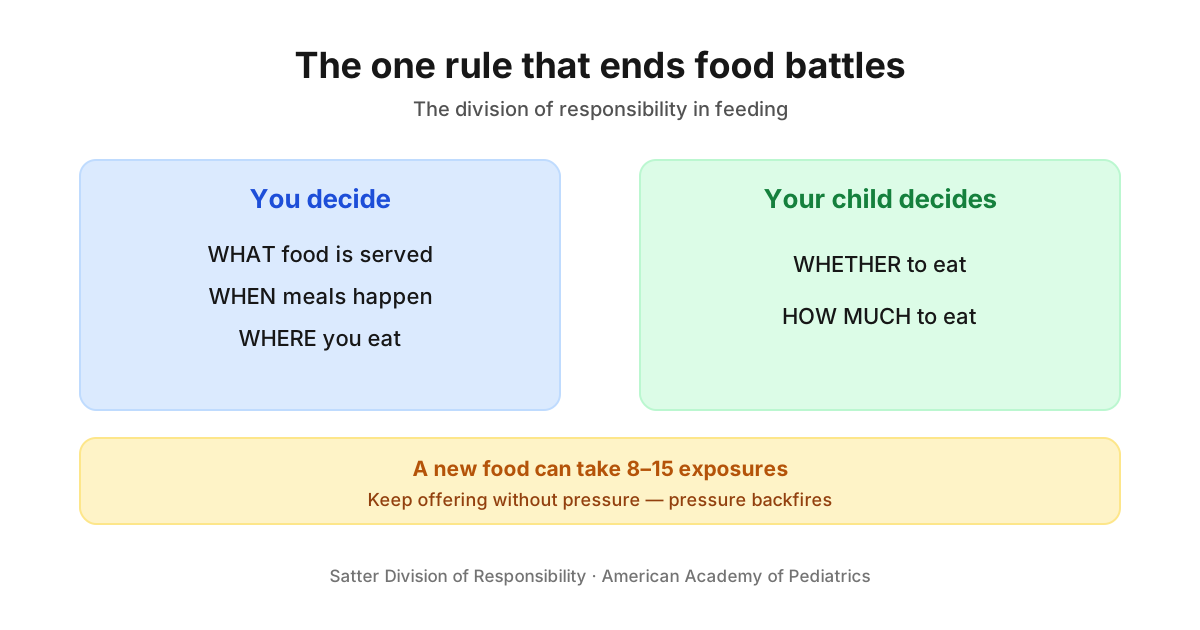
The most widely endorsed framework for feeding young children is dietitian Ellyn Satter's division of responsibility, and it's elegantly simple:
- Parents decide: what, when, where. You choose the menu, the schedule (meals plus planned snacks), and the table.
- Children decide: whether and how much. From what's served, they eat as much or as little as they want — including nothing.
That's the whole deal. No negotiating, no short-order cooking, no "three more bites." Your job ends when reasonable food hits the table; their job — listening to their own hunger and fullness — begins.
It feels radical because it removes the lever parents reach for most: pressure. Which brings us to the key finding.
Why pressure backfires
Decades of feeding research, reflected in AAP, CDC, and NHS guidance, points the same direction:
- Pressuring ("just one bite") increases refusal. Foods eaten under pressure become less liked, not more. The NHS is blunt about it: forcing children to eat tends to make fussy eating worse.
- Clean-plate rules override fullness cues. Toddlers are actually excellent at self-regulating intake across days; pressure teaches them to ignore the very signals that make that work.
- Rewards poison the well. "Eat your broccoli and you get dessert" reliably teaches one lesson: broccoli is the tax, dessert is the prize. The vegetable's stock drops further.
- Battles make food emotionally loaded. The calmer the table, the more willing the eater — neophobia shrinks fastest in low-stress, no-spotlight conditions.
What replaces pressure: boring, relentless exposure. Serve the rejected food again — a small amount, alongside something they reliably eat — and say nothing about it. Eat it yourself, visibly and happily. Repeat across weeks. The CDC's advice is patience plus repetition, not persuasion.
A no-battle playbook
- Run a schedule, not a buffet. Three meals and 2–3 planned snacks, with only water in between. A toddler grazing milk and crackers all afternoon arrives at dinner with zero appetite — the NHS flags too much milk and snacking as a top hidden cause of "fussy eating."
- Always include one safe food. Every meal has something they generally accept (bread, rice, fruit). The new or disliked food sits beside it, pressure-free.
- Keep portions tiny. A teaspoon of the new food is an invitation; a heap is a threat. They can ask for more — toddlers love asking for more.
- Eat together when you can. Modeling is the strongest "intervention" in the research: children eat what they watch their people eat (AAP).
- Let them touch, smush, lick, and abandon. Sensory familiarity is a real step toward eating. Yes, it's gross. It's also progress.
- Involve them outside the meal. Washing the green beans or stirring the bowl builds ownership with zero eating pressure (NHS).
- Judge the week, not the meal. Toddler nutrition averages out over days. One spurned dinner means nothing.
If you're at the very start of this journey, the foundations get laid earlier than you'd think — see our guides on starting solids and baby-led weaning vs. purées. And because exposure-counting is genuinely hard to track in your head, some parents log new-food tries as tiny wins — that's exactly the kind of small, repeatable step TinyWins was built around.
Two classic patterns (and the calm response)
The food jag. This week, only buttered noodles. Three meals a day, with feeling. Jags are a normal expression of toddler neophobia — the AAP's advice is to keep serving the jag food alongside normal variety rather than fighting it or building every meal around it. Most jags burn out on their own; the ones parents battle hardest tend to last longest.
"They'd starve before eating that." Healthy toddlers offered regular meals don't meaningfully under-eat over time — intake self-balances across the week even when single days look alarming (AAP). The dramatic dinner refusal usually corrects at tomorrow's breakfast, provided the gap wasn't bridged by crackers at 8pm.
When it's more than picky eating
Typical picky eating is annoying but benign. Check in with your pediatrician if your child is losing weight or falling off their growth curve, accepts fewer than ~15–20 total foods or drops entire food groups long-term, gags or has trouble swallowing textures, shows signs of low energy or suspected nutrient deficiency, or if mealtimes involve real distress rather than mere refusal (AAP). These can signal feeding disorders or sensory issues that deserve real support — and earlier is easier.
For everyone else: serve the food, eat your own dinner, and let the 12th exposure quietly do its work. The peas will have their day. (And if dinner refusal comes with a side of floor-screaming, our tantrum science guide covers that half of the show.)
This article is educational and not medical advice. Always check with your pediatrician/provider.