Your toddler used to nap like a champion. This week, you've put them down, listened to forty minutes of cheerful babbling through the monitor, and watched bedtime detonate into a 9 p.m. standoff. Did you break the nap? Is it gone forever? Should you fight to keep it?
Probably not, and here's the reassuring frame: nap transitions are a normal, predictable part of growing up. Babies drop naps in a roughly known order, for a real biological reason, and the bumpy in-between phase is temporary. Let's walk the whole staircase — from four naps down to none — so you know which step you're on.
Why naps drop at all
It comes down to one mechanism: sleep pressure. The longer a baby is awake, the more the drive to sleep builds. As the brain matures, babies can comfortably stay awake for longer stretches — and when their awake-time capacity grows, an old nap stops fitting. Either it won't happen, or it happens but steals from night sleep.
This is the same engine behind "wake windows." As those windows lengthen with age, the day reorganizes itself around fewer, longer sleeps. If you want the underlying mechanics, we cover them in wake windows by age — but the short version is: naps don't drop on a date, they drop when the biology is ready.
The other anchor is total sleep. The AASM consensus, endorsed by the AAP, recommends 12–16 hours per 24 hours for infants 4–12 months, 11–14 hours for ages 1–2, and 10–13 hours for ages 3–5 — naps included. When a nap drops, that sleep doesn't vanish; it usually consolidates into a longer night. Watching the 24-hour total, not just the daytime gaps, is how you tell a healthy transition from a baby who's simply undersleeping.
The readiness signs (the same ones, every time)
The wonderful thing about nap transitions is that the "ready to drop" signals are nearly identical at every stage. Look for a consistent pattern over one to two weeks, not a single rough day:
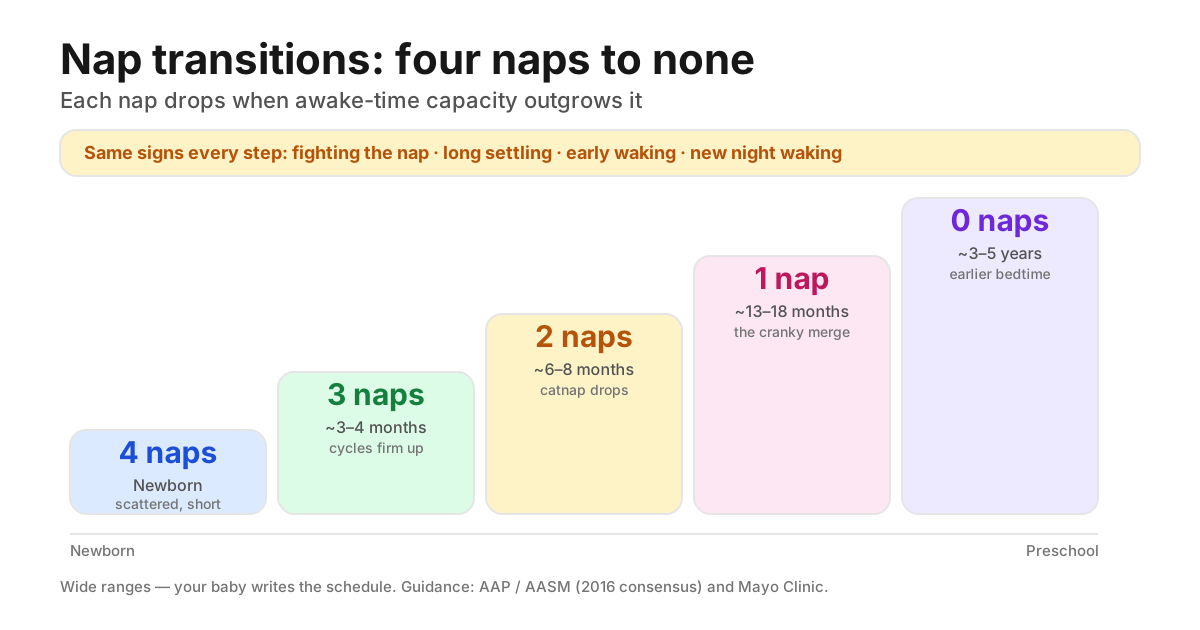
- Fighting or skipping a nap your baby used to take reliably.
- Taking much longer to fall asleep at nap time or bedtime.
- Early-morning waking — up before dawn and done for the day.
- New night waking in a baby who had been sleeping through.
One or two bad days are just a blip — teething, a cold, a leap. A steady two-week trend is the real signal. When in doubt, wait; it's easier to drop a nap a little late than to yank one too early and end up with a chronically overtired kid.
The staircase, step by step
Ages below are wide ranges, not deadlines. Your baby may hit each step early or late and be entirely typical.
Four naps → three (around 3–4 months)
Newborns nap in a scattered, unpredictable way — often four or more short sleeps a day. Around 3–4 months, as regular sleep cycles begin to develop, the day starts to organize into something more like three naps. This one is gradual and rarely dramatic — the schedule firms up more than it "drops."
Three naps → two (around 6–8 months)
The third (late-afternoon) catnap is usually the first to go. You'll notice it because that little nap starts refusing to happen, or because it pushes bedtime uncomfortably late. Moving to two solid naps — mid-morning and early afternoon — with a slightly earlier bedtime smooths the change.
Two naps → one (around 13–18 months)
This is the big, famously cranky one — and the one parents fight hardest. Somewhere between roughly 12 and 18 months, the morning nap starts sabotaging the afternoon nap or bedtime. The fix is to slowly push the morning nap later — by 15–30 minutes every few days — until it merges into one early-afternoon nap, usually after an early lunch. Expect a couple of weeks of grumpiness while the single longer nap establishes itself.
One nap → none (around ages 3–5)
The last nap is the longest-lived, often holding until age 3, 4, or even 5. Mayo Clinic notes that until about age 3 most children still nap 1–2 hours in the afternoon, then naps shorten, and by age 5 most children have stopped napping. Nationwide Children's puts the typical drop between ages 3 and 5. The tell: the nap, if it happens, pushes bedtime far too late, or your child lies awake at bedtime because they napped. When the nap goes, move bedtime earlier — that 10–13 hours of total sleep now has to fit into the night.
Bridging the cranky in-between
Every transition has an awkward middle where the old schedule is too much sleep and the new one is too little. A few moves make it gentler:
- Alternate days at first. Offer the nap one day, skip it the next, and watch which days go better. Many kids spend weeks half-in, half-out — that's normal.
- Pull bedtime earlier. During any transition, an earlier bedtime (sometimes 30–60 minutes earlier) absorbs the lost daytime sleep and prevents the overtired spiral.
- Shift the remaining nap earlier, especially during the 2→1 merge, so the long awake stretch lands after the nap, not before bedtime.
- Offer quiet rest even without sleep. A dim room and a few books for 30–45 minutes still recharges a child who won't actually nap — and protects everyone's afternoon. Both Mayo and the AAP favor keeping a consistent rest window even as naps fade.
- Hold the schedule steady. Mayo's nap guidance emphasizes consistent nap and wake times and keeping naps out of the late afternoon, which protects nighttime sleep during the wobble.
Give any transition about two weeks to settle before deciding it isn't working. Most of the chaos is the adjustment period, not a permanent state.
A quick word on "false" transitions
Not every nap strike is a real drop. The biggest impostor is a sleep regression — a developmental leap (crawling, walking, talking, the 18-month and 2-year autonomy pushes) that scrambles sleep for a week or two and then resolves. If you drop a nap during one of these and the leap passes, you can end up with an overtired, under-napped kid. When sleep falls apart suddenly and your child still seems to need the nap, suspect a regression first — we sort the real drivers in sleep regressions by age. Illness, travel, and teething cause the same temporary mess. Real transitions are gradual and persistent; impostors are sudden and pass.
When to check with your pediatrician
Nap transitions are normal development, not a medical problem — but mention it at a well-visit, or call sooner, if:
- Your child is consistently sleeping well below the AASM total-sleep range for their age, even after the transition settles.
- A nap or sleep change comes with poor weight gain, unusual daytime sleepiness, or signs of illness.
- You notice snoring, gasping, mouth-breathing, or pauses in breathing during sleep — these can point to sleep-disordered breathing and deserve a look.
- A toddler or preschooler suddenly needs much more sleep than usual without an obvious cause.
For everything else, trust the staircase. Your baby will drop each nap when they're ready — your job is to read the signs, soften the landing, and protect the total sleep. The schedule is theirs to write; you're just taking dictation.
This article is educational and not medical advice. Always check with your pediatrician/provider.