It's 2 a.m., your baby has been sleeping beautifully for weeks, and suddenly they're up every ninety minutes like a tiny rooster with a grievance. You haven't changed a thing. So what happened?
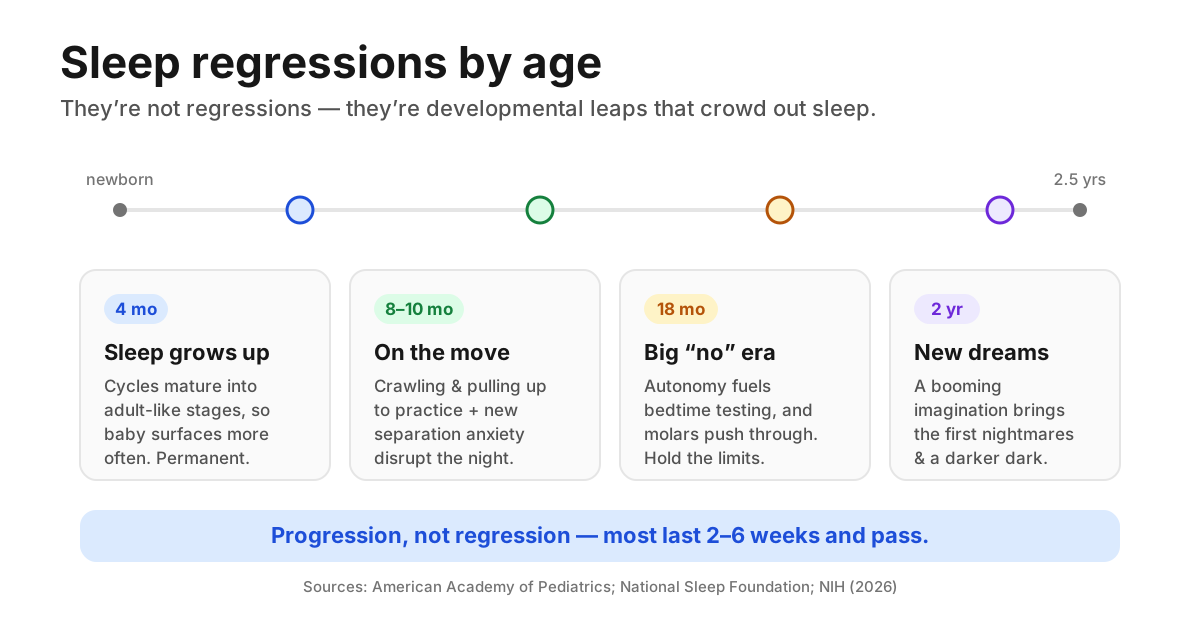
Almost certainly: a sleep regression. And here's the reframe that helps most at 2 a.m. — it's the wrong word. Nothing is regressing. Your baby's brain just leveled up, and the new skills are crowding out sleep. These are developmental progressions wearing a regression costume. Once you know which leap is driving the bump, it's far easier to ride out (and to resist the urge to overhaul everything that was working).
What the science actually says
Newborn sleep is gloriously disorganized — short stretches, no real day/night rhythm, drifting between active and quiet sleep. According to the American Academy of Pediatrics, babies don't have regular sleep cycles until about 4 months of age. That single fact explains the most famous regression of all.
The other "regressions" line up with predictable developmental milestones: learning to move, learning that you exist even when you leave the room, growing teeth, and growing an imagination. The National Sleep Foundation notes that temporary sleep disruptions cluster around 4, 6, 8, 12, and 18 months, driven by teething, growth spurts, illness, shifting nap schedules, and milestones like learning to talk or walk. Ages are approximate — your baby hasn't read the calendar. Think of these as a rough map, not a schedule.
One more thing worth saying plainly: a regression is not a sign you did something wrong, and it's not a reason to assume you've "lost" your baby's good sleep forever. It's a phase with an expiration date.
The 4-month change: your baby's sleep grows up
This is the big one, and it's not really a regression — it's a one-way upgrade.
Around 4 months, your baby's sleep matures from the simple newborn pattern into cyclical, adult-like sleep, moving through lighter and deeper stages roughly every 45 to 60 minutes. At the end of each cycle, everyone — adults included — briefly surfaces toward wakefulness. The difference is that you roll over and don't remember it. A 4-month-old surfaces, notices the room is different from where they fell asleep, and announces it.
Why it feels like everything fell apart: the change is permanent. Unlike later bumps, sleep doesn't snap back to the old pattern, because the old pattern is gone for good. What does improve, usually over 2 to 6 weeks, is your baby's ability to re-settle between cycles.
What helps:
- Give a beat before you go in. It's normal for a baby to wake briefly and resettle on their own. The AAP suggests putting your baby down drowsy but awake so they practice falling asleep in the same spot they'll wake up in — which makes the 2 a.m. surfacing far less alarming for them.
- Anchor the day. Plenty of daytime light and activity, a calm and predictable wind-down at night.
- Keep the sleep space boring and safe. Same crib, same firm flat mattress, no new props you'll have to recreate at 2 a.m. (More on the safe setup below.)
If you're weighing whether to start more structured sleep coaching around now, our guide to sleep training methods, compared lays out the options without the dogma.
The 8–10 month bump: a body that won't stop practicing
Somewhere between 8 and 10 months, sleep often gets choppy again. Two forces collide.
Force one: motor development. This is peak crawling, pulling-to-stand, and cruising season. Babies are so driven to practice new skills that they'll do it at 3 a.m., wide awake in the crib, pulling up on the rail and then getting stuck and indignant about it. The brain is too busy rehearsing to power down.
Force two: separation anxiety. Around this age, object permanence matures — your baby now understands you still exist when you walk out, which is exactly why your absence is suddenly worth protesting. Waking alone in the dark went from neutral to distressing.
What helps:
- Practice the new skill in daylight. Lots of floor time to crawl and pull up means less urgent rehearsing overnight.
- Keep goodbyes consistent and brief. A predictable bedtime goodbye teaches the reassuring lesson that you always come back. Front-load connection during the day.
- Hold your routine steady. Now is not the moment to introduce three new sleep crutches. Consistency is what shortens the bump — typically back to baseline within a few weeks.
18 months and 2 years: autonomy, molars, and the arrival of bad dreams
These later bumps are real but more variable — some toddlers sail through, others hit them hard.
Around 18 months, the engine is autonomy. This is the dawn of the mighty "no," and bedtime becomes a natural arena to test limits ("one more book," "I need water," the great stalling arts). Molars and canines are also pushing through around now, which is genuinely uncomfortable.
Around 2 years, add a booming imagination. Toddlers start to have nightmares, and a richer inner world means the dark can feel populated. A new sibling, potty training, or the move from crib to bed can pile on too.
What helps:
- Loving limits, held consistently. Decide the bedtime rules — number of books, lights out, how you'll handle callbacks — and keep them the same every night. Predictability is reassuring, not mean.
- Comfort nightmares, don't over-engineer them. Go in, reassure briefly, keep it low-key. A nightlight and a beloved lovey help. (Worth knowing: nightmares happen in the second half of the night and are remembered; night terrors happen earlier, look dramatic, and aren't.)
- Treat teething pain on its own merits, not by rebuilding the entire sleep routine around it.
How much sleep is normal anyway?
It helps to know the target so you're not chasing an impossible number. The American Academy of Sleep Medicine, summarized by the AAP, recommends per 24 hours (naps included):
- Infants 4–12 months: 12–16 hours
- Children 1–2 years: 11–14 hours
- Children 3–5 years: 10–13 hours
During a regression, your baby may temporarily land at the low end. That's expected. The goal isn't a perfect number; it's a downward-not-spiraling trend and a baby who's mostly content during the day.
A note on safety that doesn't change with any regression: every sleep, your baby goes down on their back, on a firm and flat surface, with nothing else in the space, per the NIH Safe to Sleep guidance. Regressions tempt tired parents toward couch-sleeping or inclined seats — both are higher-risk. The full rundown is in our ABCs of safe sleep.
If you want to see the pattern instead of guessing, logging wake-ups for a week or two often reveals that the "random" night chaos is actually tracking a new skill — a tooth, a crawl, a leap. The TinyWins app lets you jot sleep and milestones side by side, so a regression stops feeling random and starts looking like progress on a timeline.
When it's not a regression — when to call your pediatrician
Most sleep bumps are developmental and self-limiting. But sleep changes can occasionally signal something that needs attention. Call your pediatrician if:
- Disrupted sleep lasts much longer than 6 weeks with no developmental explanation.
- Your baby seems in pain, is pulling at an ear, or has a fever.
- You notice snoring, gasping, or pauses in breathing during sleep.
- There's poor weight gain, persistent daytime lethargy, or your baby seems unwell rather than just busy and overtired.
- Your own exhaustion has tipped into something heavier — persistent sadness, anxiety, or hopelessness. That matters too; see perinatal mood and the difference between baby blues and PPD, and don't wait to ask for help.
The reassuring headline: nearly every regression is your baby getting better at being a person — just at an inconvenient hour. Hold your routine, keep the sleep space safe and boring, treat real pain, and give it a few weeks. The leap finishes. The sleep comes back.
This article is educational and not medical advice. Always check with your pediatrician/provider.