It's the fourth night in a row of broken sleep, your baby is gnawing on everything within reach, and the internet has convinced you that teething is behind the drool, the fussing, the bad nap, and possibly the weather. Here's the reassuring truth: teething is real, it's temporary, and most of what soothes it is sitting in your kitchen. The trickier truth is that teething gets blamed for a lot of things it doesn't actually cause — and a couple of the popular "remedies" are ones the FDA wants you to skip entirely.
This guide walks through when teeth actually arrive, what teething does and doesn't do, what genuinely helps, and the short list of products to leave on the shelf.
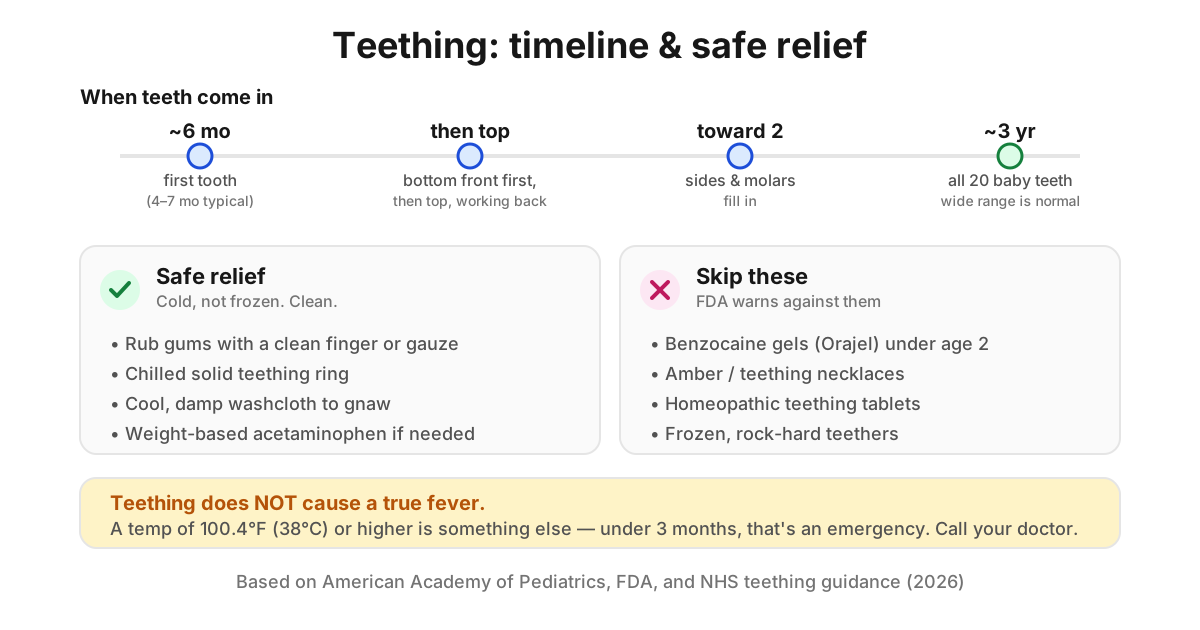
When teeth actually come in
Teeth run on their own schedule, and that schedule is wide. According to the American Academy of Pediatrics, the first tooth usually appears around 6 months, but anywhere from 4 to 7 months is typical — and plenty of perfectly healthy babies don't pop a tooth until closer to their first birthday. A rare few are even born with one.
The usual order: the two bottom front teeth (lower central incisors) tend to come first, followed by the two top front teeth, then the ones on either side, working back toward the molars. By the time your child is about 3 years old, they'll typically have the full set of 20 baby teeth.
The headline to tape to the fridge: variation is normal, and a late first tooth is almost never a problem. Teeth don't arrive on a leaderboard, and an early or late mouthful tells you nothing about how clever or coordinated your baby is. If no teeth have shown up by around 18 months, mention it at a well-visit so your pediatrician or dentist can take a look — but until then, there's no race to win. (This is the same idea behind why milestones beat ages: the range is the point.)
What teething actually does — and what it doesn't
Real teething symptoms cluster in the few days around a tooth breaking through the gum. Per the AAP and the NHS, the common, genuine signs are:
- Drooling — sometimes a lot, occasionally enough to cause a mild drool rash on the chin from constant wetness.
- Chewing and gnawing on fingers, toys, and the side of the crib.
- Sore, swollen, tender gums, sometimes with a visible bulge where the tooth is about to surface.
- Irritability and crankiness, especially in the day or two before a tooth cuts through.
- A slightly raised temperature — but slightly is the operative word.
Now the part that saves a lot of misplaced worry. Teething does not cause a true fever. It may nudge your baby's temperature up a touch, but anything 100.4°F (38°C) or higher is a real fever from something else — usually a run-of-the-mill virus that happened to show up the same week as a tooth. Babies this age catch a lot of bugs precisely because they're putting everything in their mouths, so the timing overlaps constantly.
Teething also does not cause diarrhea, a runny nose, a cough, a rash, or vomiting. The research is consistent on this: those are signs of illness, not teeth. If your baby seems genuinely sick — not just cranky — look for another cause and treat it as illness.
This matters most in the youngest babies. In a baby under 3 months, any rectal temperature of 100.4°F (38°C) or higher is a medical emergency — call your doctor or go to the ER immediately, even if your baby looks fine, and never write it off as teething. For the full age-by-age breakdown, see our guide to newborn fever and when to worry.
What actually soothes a teething baby
The good news: the most effective relief is also the simplest, and it's free. The common thread is cold and counterpressure — gentle, steady pressure on a sore gum, plus a little chill to numb it.
- Rub the gums. A clean finger or a piece of damp gauze, pressed firmly against the sore spot for a minute or two, often works better than any gadget. Your baby may fuss at first and then settle into it.
- Offer something cold to chew — cold, not frozen. A solid rubber teething ring chilled in the refrigerator (never the freezer — rock-hard rings can bruise gums) gives baby something to bite. A clean, damp washcloth chilled in the fridge is a parent-favorite for a reason.
- Try cold food, once solids have started. If your baby is already eating solids, cold options like a bit of unsweetened yogurt or chilled (well-mashed or appropriately sized) soft fruit can soothe gums. Watch for choking and follow safe-feeding sizing.
- Wipe the drool. Keeping the chin dry helps prevent drool rash; a little plain barrier ointment helps if the skin's already irritated.
- For real pain, reach for the right medicine. The NHS notes that if your baby is in genuine distress, an age-appropriate, weight-based dose of acetaminophen (paracetamol) or ibuprofen — ibuprofen only over 6 months — is reasonable. Use the dosing for your baby's weight, and check with your pediatrician if you're unsure.
A teething ring with a handle baby can grip, or even a clean cold spoon, can do the trick. You don't need a drawer full of specialty products — you need cold, clean, and a little patience.
What to skip — straight from the FDA
This is the part to read twice, because some of the most heavily marketed "teething remedies" are exactly the ones to avoid. The FDA has issued direct warnings:
- Skip benzocaine teething gels and liquids (sold as Orajel, Anbesol, and store brands) in children under 2. Benzocaine can cause methemoglobinemia — a rare but serious condition that drops the amount of oxygen the blood can carry. The FDA has asked companies to stop marketing these products for teething infants, because the risk outweighs any brief, drool-diluted numbing.
- Skip homeopathic teething tablets and gels. The FDA has flagged some products for inconsistent amounts of belladonna, a toxic substance, with reports of serious harm in babies.
- Skip teething necklaces, bracelets, and anklets — amber, wood, marble, or silicone. The FDA warns these can choke or strangle a baby. The supposed mechanism (amber releasing a soothing chemical when warmed) isn't supported by evidence, and the choking and strangulation risk is very real. The same goes for letting a baby chew a hard, breakable object.
- Skip frozen teethers and ice. Something rock-hard from the freezer can damage tender gums. Cold, not frozen, is the rule.
If you take one thing from this section: the bar for a teething product is can it choke, strangle, or poison? If the answer is yes, no amount of marketing makes it worth it. Cold and clean wins.
Caring for those new teeth
Once that first tooth is in, it needs care — cavities can form on baby teeth, and those teeth hold space for the adult ones. Per the AAP, start brushing with a rice-grain-sized smear of fluoride toothpaste twice a day from the very first tooth, bumping up to a pea-sized amount around age 3. And the recommendation that surprises a lot of parents: schedule your child's first dental visit by their first birthday, or within six months of the first tooth — whichever comes first.
Tracking which teeth have arrived (and when the rough patches hit) makes the pattern easier to see — and gives you something concrete to mention at the next checkup. You can log new teeth and rough nights in your TinyWins journal so you're not relying on sleep-deprived memory.
When to call your pediatrician
Most teething needs patience, not a phone call. But reach out to your pediatrician if:
- Your baby has a temperature of 100.4°F (38°C) or higher — that's a real fever, not teething, and in a baby under 3 months it's an emergency.
- Your baby has diarrhea, vomiting, a rash, a persistent runny nose or cough, or otherwise seems genuinely unwell — those aren't teething symptoms.
- The fussiness is extreme or doesn't ease with the simple measures above, or your baby seems to be in pain you can't soothe.
- No teeth have appeared by about 18 months.
- You spot anything that worries you about how the teeth or gums look.
You know your baby better than any checklist does. If something feels off, calling your pediatrician is never the wrong move — that's exactly what they're there for.
The bottom line
Teething is a months-long, totally normal process that arrives on its own schedule — first tooth around 6 months, full set by about age 3, with lots of normal wiggle room on either side. It causes sore gums, drool, and some crankiness, but it does not cause a true fever or make your baby sick. The relief that works is cold and simple: a clean finger, a chilled ring, a cool washcloth. And the products to leave on the shelf are the ones the FDA warns about — benzocaine gels, homeopathic tablets, and teething necklaces. When teething overlaps with a genuinely sick baby, trust your gut and treat the illness, not the teeth.
This article is educational and not medical advice. Always check with your pediatrician/provider.