It's 4 p.m., your baby has been awake for what feels like exactly the wrong amount of time, and a glossy app is telling you the "optimal wake window" is 2 hours and 15 minutes. You missed it by twenty minutes. Now what — is the whole day ruined?
Breathe. Here's the honest version of the wake-windows story: the biology underneath the buzzword is real and useful, the precise numbers are not gospel, and your baby is not a malfunctioning machine because they didn't nap on a sleep-app's schedule.
What "wake windows" actually are
A wake window is simply the time your baby is awake between sleeps — from the moment they wake up to the moment they fall asleep again. It's parent-language, popularized by sleep apps and consultants, not a unit you'll find in a pediatric textbook. No major medical body — not the American Academy of Pediatrics, not the American Academy of Sleep Medicine — publishes an official wake-window chart.
But the concept points at something genuinely real. Two systems drive when babies sleep:
- Sleep pressure (the "homeostatic" drive). A chemical called adenosine builds up in the brain the entire time you're awake, and clears while you sleep. The longer the awake stretch, the higher the pressure — and the easier it should be to fall asleep, up to a point.
- The circadian rhythm (the body clock). This is the roughly 24-hour internal clock that tells the body when it's day and when it's night. Crucially, it isn't functional at birth — the AAP notes that babies don't develop regular sleep cycles until around 4 months of age.
"Wake windows" are really just a friendly way of talking about sleep pressure. The skill isn't hitting a magic number — it's catching the window where sleep pressure is high enough that your baby goes down easily, but not so high that they've tipped into overtired meltdown.
The numbers everyone wants (with the asterisk that matters)
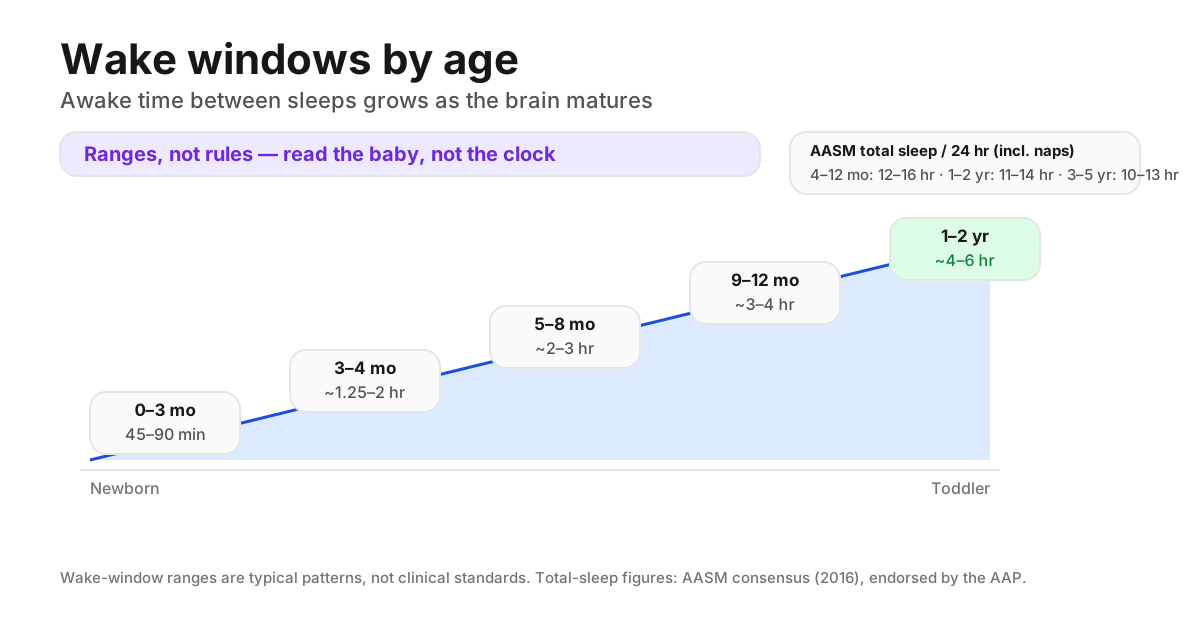
Here are reasonable, commonly cited awake-time ranges by age. Read them as starting points, not targets — every baby runs a little fast or slow, and a window that's perfect at the first nap is often longer by bedtime.
- Newborn (0–3 months): ~45–90 minutes. Newborns tire fast and can rarely stay up much past an hour without getting fussy.
- 3–4 months: ~1.25–2 hours. The 4-month shift in sleep architecture lands here; windows stretch as the body clock comes online.
- 5–8 months: ~2–3 hours.
- 9–12 months: ~3–4 hours, usually across two naps.
- 12–24 months: ~4–6 hours, especially after the drop to one nap.
- Preschool (3–5 years): ~5–7+ hours, on a single nap or none.
The asterisk: these are not published clinical standards. They're a synthesis of typical patterns, and your baby's real numbers might sit outside them and be completely fine. The clock is a hint. The baby is the data.
Read the baby, not the clock
Drowsy cues beat any timer. The classic progression: your baby gets quiet and still, breaks eye contact and stares into the middle distance, then starts the fussing-rubbing-yawning routine. That stare-off is your real green light — earlier than most people think.
The AAP's single most practical piece of sleep advice is to put your baby down drowsy but awake once they're past the newborn stage — sleepy, but not fully asleep — so they get practice falling asleep on their own. Catching the drowsy window is what makes that possible. Miss it, and you're either fighting an under-tired baby who isn't ready, or wrestling an overtired one who's flooded with stress hormones.
Overtired vs. undertired
This is the distinction that makes wake windows click:
- Overtired is the famous one. Counterintuitively, an over-tired baby often fights sleep harder — frantic crying, back-arching, eyes screwed shut, hard to settle. When you've blown past the window, cortisol and adrenaline rise and act like a second wind. The fix: an earlier next sleep, and a calm, dim wind-down.
- Undertired is the quieter culprit. A baby who chats and plays happily in the crib for 30 minutes, or who simply won't go down, often just doesn't have enough sleep pressure yet. The fix: a slightly later next sleep, or a bit more active awake time.
If naps are short or bedtime is a battle, the cause is almost always one of these two — and the cure is nudging the window 15–20 minutes in the right direction for a few days, not overhauling everything overnight.
Total sleep is the number that actually matters
Wake windows are a means to an end, and the end is enough total sleep. Here's where there is real, consensus-backed science. The AASM consensus statement, endorsed by the AAP, recommends the following total sleep per 24 hours, including naps:
- Infants 4–12 months: 12–16 hours
- Children 1–2 years: 11–14 hours
- Children 3–5 years: 10–13 hours
(Newborns under 4 months aren't in the consensus chart because their sleep is so variable, but they typically log 14–17 hours across the day and night.)
This reframes the whole anxiety. If your baby's wake windows ran a little long today but they still hit their 24-hour total, you're fine. If a "perfect" wake window means a baby who's chronically under their range, the window isn't actually working. Zoom out to the day, not the gap. Tracking a few days of sleep — in a notebook or in your TinyWins journal — usually surfaces your baby's natural rhythm faster than any generic schedule, because it's their data, not an average of strangers'.
Why the windows keep changing on you
Just when you've cracked the code, it breaks — and that's not you doing anything wrong. Windows lengthen as the brain matures, and they get scrambled by the same developmental leaps that drive the so-called sleep regressions: the 4-month shift in sleep architecture, the 8–10 month surge of crawling and separation anxiety, the toddler push for autonomy. These are progressions disrupting sleep, not failures. If your baby's sleep just fell apart for no obvious reason, our guide to sleep regressions by age explains what's really driving each one.
And wake windows are the mechanism behind every nap drop. When a baby can comfortably stay awake longer, an old nap stops fitting and eventually disappears. We map the full arc — from four naps down to none — in nap transitions, explained.
When to check in with your pediatrician
Wake-window fiddling is a comfort-and-convenience project, not a medical one — but a few sleep patterns are worth a real conversation:
- Your baby is consistently far below the AASM total-sleep range for their age, despite a sane routine.
- Sleep suddenly worsens alongside poor feeding, poor weight gain, unusual lethargy, or illness.
- You notice snoring, gasping, mouth-breathing, or pauses in breathing during sleep — these can signal a sleep-disordered-breathing issue and deserve a check.
- The sleep deprivation is wrecking your health or mental health. That's a real medical issue too, and your pediatrician and your own doctor both want to know.
For everything else, remember the reassuring truth buried under all the charts: babies are wired to sleep. Your job isn't to engineer the perfect window — it's to read your particular baby, protect their total sleep, and let the rest be approximate.
This article is educational and not medical advice. Always check with your pediatrician/provider.