It's the middle of the night, your baby is miserable with a fever, and you're standing at the bathroom cabinet holding a bottle of children's medicine and your phone, trying to do mental math on a dose. This is one of those parenting moments where getting it right actually matters — acetaminophen overdose is a leading cause of accidental poisoning in young children, and the margin for error is smaller than most of us realize.
So let's slow it down and make it simple. There are a handful of rules that prevent almost every serious dosing mistake, and once you know them, that 2 a.m. moment gets a lot less frightening.
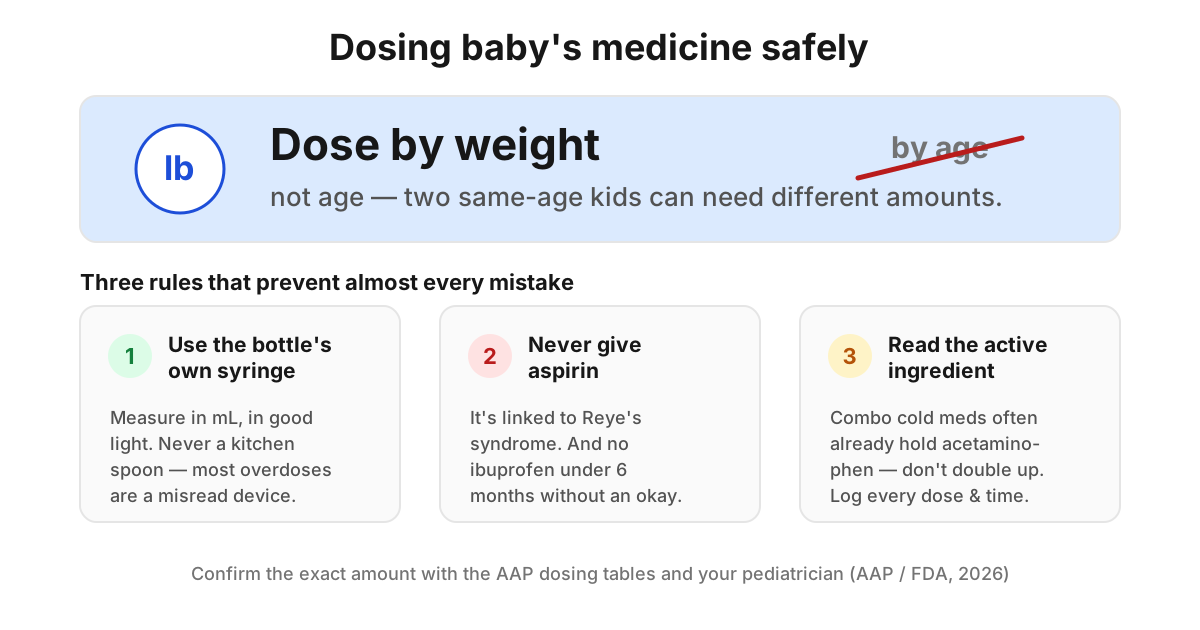
Rule one: dose by weight, not age
This is the single most important thing on this page. Always dose by your child's weight when you know it — not by their age. The American Academy of Pediatrics dosing tables list weight first for exactly this reason: two children who are both "18 months old" can weigh 20 pounds or 30 pounds, and the right dose for one would be wrong for the other.
Age is only a backup — use it when you genuinely don't have a recent weight handy. If your baby was weighed at a checkup in the last month or two, use that number.
You'll notice this article doesn't print a dose chart. That's deliberate. The correct amount depends on both your child's exact weight and the exact concentration of the bottle in your hand, and product concentrations and label formats change over time. Rather than risk you reading a stale number off a blog, the right move is to pull up the AAP's official, current tables and match them to your specific bottle:
And whenever you're unsure, your pediatrician's office or a pharmacist will confirm the exact dose for your child in about thirty seconds. That call is never a bother.
Rule two: know which medicine, and the age cutoffs
There are really only two over-the-counter fever-and-pain medicines for children, and one drug you must never use.
Acetaminophen (brand name Tylenol) is the workhorse. It can be used from early infancy — but with a hard caveat: for any baby under 3 months (12 weeks), a fever itself is a medical emergency that needs a doctor's evaluation, so don't reach for acetaminophen to bring a young newborn's fever down on your own. Get them seen first. (More on that in our guide to newborn fever and the 100.4°F rule.) For babies under 2 in general, the AAP advises checking with your doctor before dosing.
Ibuprofen (Motrin, Advil) is the other option — and it has a firm floor: do not give ibuprofen to a baby younger than 6 months unless your pediatrician specifically directs you to, per the AAP. It isn't FDA-approved below that age, in part because young infants' kidneys are still maturing. Ibuprofen also needs to be given with some food or fluid, since it can irritate the stomach.
And the one to rule out completely: never give aspirin to a child or teenager for a fever or viral illness. It's linked to Reye's syndrome, a rare but life-threatening swelling of the liver and brain. Aspirin hides in some surprising places — check labels for "acetylsalicylic acid" or "salicylate" too.
Rule three: read the active ingredient, every time
Here's the trap that catches careful parents: accidental double-dosing through combination products.
Multi-symptom cold, cough, and flu medicines very often contain acetaminophen already. If you give one of those and then add a separate dose of Tylenol for the fever, you've just double-dosed your child on acetaminophen without realizing it. The FDA warns specifically about this — and acetaminophen overdose can cause serious liver injury.
Two habits prevent it:
- Read the "Active Ingredients" line on every bottle before you give it. If acetaminophen (or ibuprofen) is already in there, don't add a second product with the same drug.
- Skip multi-symptom products in young children altogether. The AAP advises against combination cough-and-cold medicines for children under 6, and they offer little benefit at any young age. Treat the one symptom that's actually bothering your child — usually the fever or pain — with a single-ingredient medicine instead.
This is also why two caregivers need to communicate. The classic mishap is one parent dosing at 1 a.m., going back to bed, and the other parent re-dosing at 2 a.m. not knowing it was already done.
Rule four: measure with the right tool
A surprising number of overdoses come down to the measuring device, not the math.
- Use the syringe, dropper, or cup that came with the bottle — and only that one. Different products are dosed in different concentrations, so a cup from one bottle can deliver the wrong amount of another. The FDA and AAP are emphatic about this.
- Never use a kitchen spoon. A "teaspoon" from your drawer can hold anywhere from half to double an actual measured teaspoon. Doses are written in milliliters (mL) for a reason — measure in mL.
- Double-check mL vs. the line on the syringe in good light. Most accidental overdoses are simply a misread of the measuring device.
If your bottle lost its syringe, ask a pharmacist for a free oral syringe rather than improvising.
A note on concentration confusion
For years, "infant" acetaminophen drops were more concentrated than "children's" liquid, which caused dangerous mix-ups. That's been fixed — in the U.S., infants' and children's liquid acetaminophen are now the same single concentration (160 mg per 5 mL). That's good news, but it doesn't mean you can dose on autopilot: still read the label every time, because the dose your child needs is set by their weight, not by which picture is on the box. Don't assume "infant" means "give more" or "children's" means "give less" — match the AAP table to your child's weight and the bottle's stated concentration.
When to skip the medicine — and when to call
Fever medicine treats discomfort, not the illness, and the number on the thermometer isn't the enemy. A fever is the immune system doing its job. If your baby is over 3 months, otherwise acting okay, drinking, and not visibly miserable, you don't have to medicate a fever at all — comfort is the goal.
Call your pediatrician (don't just keep re-dosing) when:
- Your baby is under 3 months with any fever of 100.4°F (38°C) or higher — this is an emergency evaluation, before any medicine.
- A fever lasts more than 24 hours in a child under 2, or you find yourself dosing around the clock for several days.
- Your child seems dehydrated (far fewer wet diapers, no tears, dry mouth), is hard to wake or unusually limp, has trouble breathing, or has a rash that doesn't fade under pressure — these mean call now or go in.
- You think your child may have gotten too much of any medicine. In the U.S., call Poison Control at 1-800-222-1222 right away — it's free, confidential, and open 24/7, even if your child seems fine.
For more on reading a fever itself — which numbers matter at which ages, and how high is too high — see our newborn fever guide. And when the dosing question is part of a longer sick stretch, our first-year illness survival guide covers what actually soothes a cold safely.
Make it a two-person system
The cleanest way to avoid a double-dose is to write it down. Every time anyone gives a dose, log the medicine, the amount in mL, and the time — so the next person, or the next you three hours later and half-asleep, can see at a glance what's already on board. You can keep that running medication log in your TinyWins journal, which means the timeline is also right there if you end up calling the nurse line.
The bottom line
Five things carry almost all the safety here: dose by weight, not age; no ibuprofen under 6 months (and no fever medicine for an under-3-month-old's fever before a doctor sees them); never aspirin; read the active ingredient to avoid double-dosing combo meds; and measure in mL with the bottle's own syringe. Pull the exact amount from the AAP's current dosing tables, confirm with your pediatrician when you're unsure, and you've removed nearly every way this goes wrong.
This article is educational and not medical advice. Always check with your pediatrician/provider.