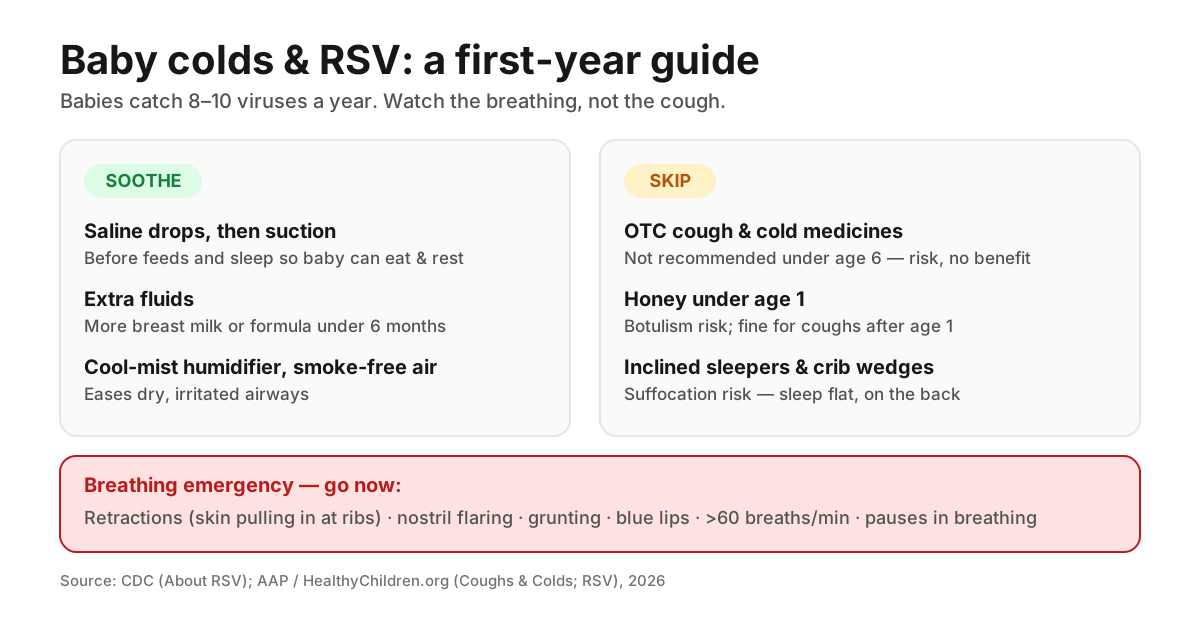
It's 2 a.m., your baby sounds like a tiny congested pug, and you're holding a phone flashlight up to their nose trying to decide whether this is "a cold" or "a thing." Here is the reassuring headline: in the first year, a healthy baby catches roughly 8 to 10 viral infections a year, and the vast majority resolve on their own with nothing but patience and a bulb syringe. The trick is knowing which symptoms are just the ordinary mess of a growing immune system — and which few are the breathing red flags that mean go now.
This guide sorts the noise. We'll cover what actually soothes a sick baby, the popular remedies that do nothing (or harm), the RSV warning signs every parent should have memorized, and how the newer RSV shots changed the math on prevention.
What the science says: most colds are just colds
A "cold" is shorthand for any of a few hundred respiratory viruses. They cause a runny or stuffy nose, sneezing, a cough, fussiness, poor feeding, and often a low fever. Because babies haven't met most of these viruses yet, they get a lot of them — and once daycare, older siblings, or a busy fall and winter enter the picture, the colds can feel back-to-back.
A single cold typically lasts 10 to 14 days, and the cough is usually the last symptom to leave, sometimes lingering two to three weeks after everything else clears. That's normal. A cough is the airway doing its job, clearing mucus. The number that matters isn't how long the cough lasts or how junky it sounds — it's how hard your baby is working to breathe. We'll come back to that.
The hard part of newborn and infant colds is that babies are obligate nose-breathers in the early months and can't blow their own noses. A stuffy nose makes feeding and sleeping genuinely difficult. So most of "treating a cold" is really just clearing the nose and keeping your baby comfortable and hydrated while the virus burns out.
What actually soothes a congested baby
The good news: the moves that work are cheap, old-fashioned, and backed by pediatric guidance.
Saline + suction. This is the workhorse. Put a few drops of saline (saline drops or spray, or a homemade salt-and-baking-soda solution) into each nostril to thin the mucus, wait a moment, then gently suction with a bulb syringe or a nasal aspirator. Do it before feeds and before sleep — a clear nose means a baby who can actually eat and rest. Don't overdo it; a handful of times a day is plenty, since too-frequent suctioning can irritate the nose.
If you've never used a bulb syringe and the diagrams aren't clicking, this short walkthrough from Cook Children's pediatric health system shows the technique:
Fluids. Extra fluids thin mucus from the inside. For babies under 6 months, that means more frequent breast milk or formula feeds — not water. Older babies can have small amounts of water along with their usual milk.
Humidified, smoke-free air. A cool-mist humidifier in the room can ease dry, irritated airways. Keep the air completely smoke-free; secondhand smoke makes colds worse and raises the risk of ear infections and serious lower-airway illness.
Comfort positioning while awake. Holding your baby a bit more upright when they're awake can help drainage. But this never changes the sleep rules: babies still sleep flat, on their back, in a bare crib. Do not prop the crib mattress, use a wedge, or move your baby to an inclined sleeper — those are suffocation risks, not cold remedies. If you want the full why-behind-the-rules, see our guide to the safe sleep ABCs.
Fever care, when needed. A fever is the immune system working, and a comfortable baby with a mild fever doesn't necessarily need medicine. If your baby is uncomfortable, acetaminophen (and ibuprofen for babies 6 months and older) can help — but dose by weight, not age, and get the dosing right. We walk through the safe approach in infant medication dosing safety. One firm rule that overrides everything else: any fever of 100.4°F (38°C) or higher in a baby under 3 months is an emergency — call your pediatrician or go in right away. Our newborn fever guide explains why.
What to skip
Over-the-counter cough and cold medicines. The FDA and the AAP advise against these for children under 4, and they are not recommended for ages 4 to 6 unless a doctor specifically directs it. They don't shorten colds, they don't reliably help symptoms, and they carry a real risk of accidental overdose. Decongestants, antihistamines, and combination "multi-symptom" syrups all fall in this bucket for little ones.
Honey under 1. For a cough in a child over 12 months, a small spoonful of honey actually works better than store-bought cough syrup. But never give honey to a baby under 1 — it can cause infant botulism, a rare but serious illness.
Antibiotics for a cold. Colds are viral. Antibiotics do nothing for them and aren't harmless — they're reserved for bacterial complications a pediatrician diagnoses, like some ear or sinus infections. (More on that in ear infections in babies.)
Tracking it all in your head at 3 a.m. You won't remember when the fever started or how many wet diapers there were. Jotting symptoms, temperatures, and feeds in the TinyWins app gives your pediatrician a real timeline instead of a sleep-deprived guess — and helps you see whether things are trending better or worse.
RSV: the cold that's worth watching closely
Respiratory syncytial virus (RSV) is one of those common cold viruses — but it's the one most likely to turn serious in babies. In older kids and adults it's just a cold. In infants, RSV is the leading cause of hospitalization in U.S. babies and the most common cause of bronchiolitis (inflammation of the smallest airways) and pneumonia in children under 1.
It usually starts exactly like any cold — runny nose, cough, low fever, fussiness, poor feeding — and most cases stay mild. The concern is when it moves into the lower airways and a baby starts working hard to breathe. Babies under 6 months, babies born prematurely, and those with heart or lung conditions are at highest risk.
You can't tell RSV from an ordinary cold by symptoms alone, and you don't need a lab test to act. What you watch is the breathing.
When to seek help — the red flags that mean go now
Call your pediatrician, or for severe signs call 911 or go to the ER, if your baby has any of these:
- Fast breathing — more than about 60 breaths a minute in an infant, or breathing that looks rapid and labored even when calm.
- Retractions — the skin pulling in around the ribs, below the breastbone, or above the collarbone with each breath, sometimes making an upside-down "V" under the neck. This means the chest is straining for air.
- Nostril flaring, grunting, or head bobbing with each breath.
- Belly breathing or wheezing — a high, whistling sound on the way out.
- Bluish color of the lips, face, or fingernails — call 911.
- Pauses in breathing (apnea), especially in young infants — call 911.
- Signs of dehydration — far fewer wet diapers (fewer than one every 8 hours), no tears, a dry mouth, or a sunken soft spot.
- A baby who is very sleepy and hard to wake, won't feed, or just seems "off."
And the age rules that always apply: any fever of 100.4°F or higher in a baby under 3 months, or any trouble breathing at any age, is a reason to be seen right away. When in doubt, you are never wrong to call. Pediatric offices and nurse lines field exactly these questions all day.
How to prevent RSV
This is the part that genuinely changed in recent years. There are now two powerful tools, and most babies need just one of them:
- A maternal RSV vaccine (Abrysvo) given during pregnancy at 32 to 36 weeks, which passes protective antibodies to the baby before birth and substantially cuts the risk of RSV hospitalization in the first months.
- A single antibody shot for the baby — nirsevimab — that gives direct, ready-made protection and is highly effective at preventing RSV hospitalization, given to infants entering their first RSV season (and to certain high-risk older babies).
Your prenatal or pediatric provider will help you figure out which path fits your timing and RSV season. If you want the broader picture of how these fit alongside routine shots, see our vaccine schedule explained.
Beyond immunization, the basics still matter: wash hands often, keep people with cold symptoms away from a newborn, ask visitors not to kiss the baby's face during cold season, keep the home smoke-free, and breastfeed if you can — breast milk passes along antibodies.
The bottom line
A baby with a cold is doing the unglamorous work of building an immune system, one stuffy night at a time. Soothe with saline, suction, fluids, and a humidifier; skip the cough syrups and the honey-under-1; protect against RSV with the maternal vaccine or the infant antibody shot; and keep your eyes on the breathing, not the cough. The colds will keep coming for a while — and then, somewhere in the toddler years, they finally start to thin out.
This article is educational and not medical advice. Always check with your pediatrician/provider.