There is a particular flavor of dread reserved for the drive to the two-month checkup. You know the shots are coming. You've read the pamphlet, and also, against your better judgment, three Facebook comment threads. You love this seven-pound person more than you knew was possible, and in twenty minutes a very kind nurse is going to make them cry.
Take a breath. The childhood vaccine schedule is one of the most studied, most boring-in-a-good-way pieces of medicine there is. It just rarely gets explained calmly. So here's the calm version: what each shot does, why the timing is built the way it is, and honest answers to the questions you're actually turning over at 3 a.m.
What the science says: small doses, perfect timing
A vaccine is a rehearsal. It shows your baby's immune system a harmless piece of a germ — a protein, a sugar coating, an inactivated fragment — so the body can build antibodies before it ever meets the real, dangerous version. When the actual germ shows up later, the immune system already knows the script.
The reason there's a schedule rather than a free-for-all is timing. Babies are born with some borrowed protection — antibodies that crossed the placenta in late pregnancy — but that gift fades over the first months of life, right as babies become mobile, mouthy, and exposed to the world. The schedule is engineered to build a baby's own immunity in the specific windows when each disease is most dangerous to them. Whooping cough (pertussis), for instance, is most deadly in the first few months — which is exactly why the DTaP series starts at two months and not at two years.
The shots are clustered into well-baby visits at 2, 4, 6, and 12 months (with another batch around 15–18 months) because that's when babies are at the pediatrician anyway, and because each disease needs multiple doses, spaced weeks apart, to build durable protection. The CDC schedule and the American Academy of Pediatrics schedule are both built on this logic.
What each visit protects against
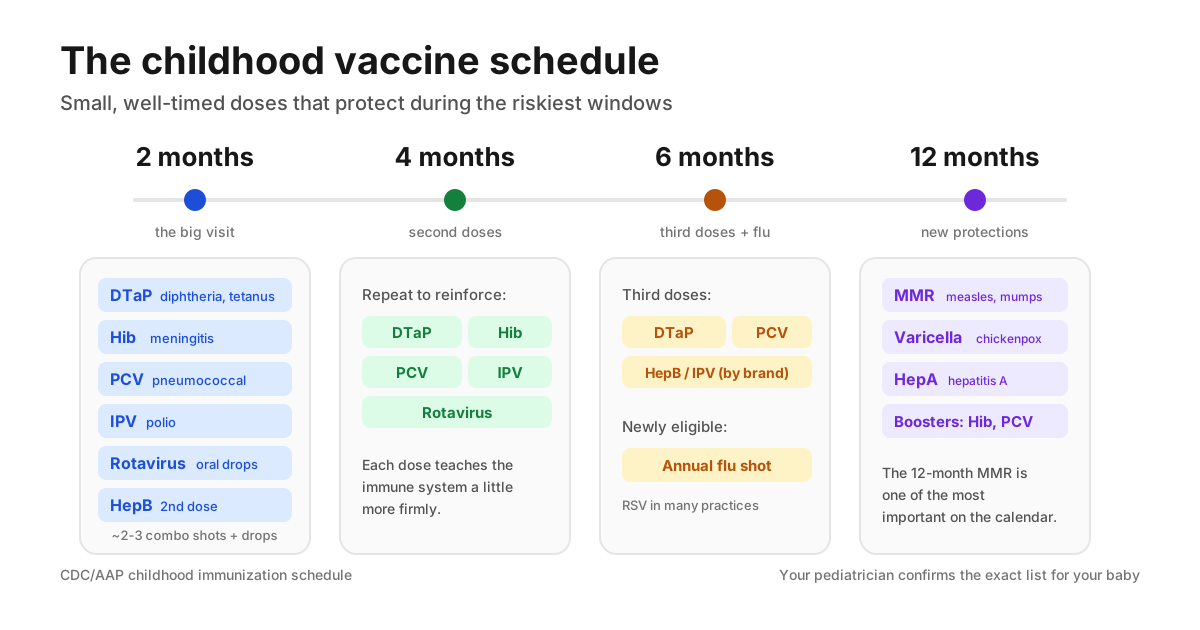
Your pediatrician will give you the exact list for your baby, but here's the shape of the first year on the standard schedule.
At birth and 2 months
- Birth: the first hepatitis B dose, usually before you leave the hospital — it protects the liver and blocks transmission of a virus that can cause lifelong infection.
- 2 months — the big one: DTaP (diphtheria, tetanus, whooping cough), Hib (a bacterium that causes meningitis), PCV (pneumococcal — pneumonia, ear and blood infections), IPV (polio), rotavirus (a nasty diarrheal illness, given as oral drops not a shot), and typically the second hepatitis B.
That sounds like a lot. In practice it's usually two or three combination injections plus the oral rotavirus dose, because several of these are bundled into single shots.
At 4 and 6 months
- 4 months: the second doses of DTaP, Hib, PCV, IPV, and rotavirus. Repetition is the point — each dose teaches the immune system a little more firmly.
- 6 months: third doses of DTaP, PCV (and HepB/IPV depending on the brand used), plus the first annual flu shot, which babies become eligible for at six months. Flu and, in many practices, RSV protection matter because respiratory illness hospitalizes more infants than almost anything else.
At 12 months and beyond
Around the first birthday, the lineup shifts to diseases that the borrowed-from-mom antibodies were masking until now: MMR (measles, mumps, rubella), varicella (chickenpox), hepatitis A, and booster doses of Hib and PCV. Measles in particular has come roaring back wherever vaccination rates dip, and it is genuinely dangerous to small children — the 12-month MMR is one of the most important shots on the whole calendar.
You can think of the schedule a bit like the way TinyWins frames milestones: a sequence of small, well-timed steps that each unlock the next. If logging the visits helps you feel on top of it, jot each one in your TinyWins journal so you're not reconstructing the record from memory at the next appointment.
The questions you're actually asking
"Isn't that too many shots for such a tiny body?"
It feels like a lot. It isn't, immunologically. From the moment of birth a baby's immune system is meeting and managing thousands of new microbes a day — on skin, in the gut, in every mouthful of air. The antigens in a full day of vaccines are a vanishingly small fraction of that everyday workload, which is why the AAP and CDC are clear that giving several vaccines together does not overwhelm or "use up" a baby's immune system. What it does do is protect your baby against more diseases, sooner.
"Can I just space them out?"
You can ask — but the major pediatric and public-health bodies recommend against it, and the reason isn't stubbornness. "Alternative" or delayed schedules have never been shown to be safer, and they carry a real cost: every week you delay a dose is a week your baby is unprotected against a disease the schedule was designed to head off. Spreading shots out also means more clinic trips and, over time, more total needle pokes, not fewer. If the volume of a single visit worries you, that's a great thing to raise with your pediatrician — there's often room to discuss pacing within evidence-based limits rather than abandoning the schedule.
"Do vaccines cause autism?"
No. This is the question that deserves the most direct answer, because the fear is sincere and the misinformation is relentless.
The entire idea traces to a single 1998 paper that was retracted for fraud — its author falsified data and ultimately lost his medical license. Since then the question has been studied about as thoroughly as any in modern medicine. A 2019 nationwide cohort study of 657,461 children, published in Annals of Internal Medicine, found no increased risk of autism in vaccinated children — and crucially, no increased risk even in subgroups with autism risk factors, which is exactly where a real effect would have shown up. The American Academy of Pediatrics walks through this evidence in detail and states it plainly: vaccines do not cause autism.
"I keep seeing conflicting recommendations — who do I follow?"
This is a fair and very 2026 question. As of early 2026, the AAP's recommended schedule differs in places from federal recommendations, with the AAP continuing to recommend some vaccines that federal officials have stepped back from. The World Health Organization and pediatric bodies in peer countries remain aligned with the long-standing childhood schedule. When the headlines conflict, the most reliable move is the unglamorous one: ask your own pediatrician what they recommend for your baby and why. They know your child, they're following the pediatric evidence, and they have no agenda beyond keeping the kid in front of them healthy.
What's normal after a shot — and when to call
Most reactions are mild, short, and a sign the immune system is doing its rehearsal:
- A sore, red, or slightly swollen leg or arm where the shot went in
- Fussiness, extra sleepiness, or a reduced appetite for a day or so
- A low-grade fever in the first day or two
- For oral rotavirus, occasionally some mild fussiness or looser stools
Cuddles, extra feeds, and a cool compress cover most of it. Ask your pediatrician before the visit whether and how to use infant acetaminophen — dosing is by weight, and routine pre-medication isn't generally recommended.
Call your pediatrician (or seek urgent care) for the uncommon things:
- A fever of 100.4°F (38°C) or higher in a baby under 3 months — for newborns this is always an immediate call, vaccine day or not (see newborn fever: when to worry)
- A fever that lasts beyond about 48 hours, or that climbs high in an older baby
- Inconsolable crying for 3+ hours, unusual limpness, or a baby who seems genuinely unwell rather than just cranky
- Any sign of a true allergic reaction — hives, swelling of the face or mouth, difficulty breathing. This is rare, but it's why you wait a few minutes in the office; if it happened at home, call 911.
Trust your read on your own baby. "Something is off and I can't name it" is always a good enough reason to call.
The bottom line
The vaccine schedule isn't a gauntlet someone designed to be hard on babies. It's a carefully sequenced set of small, well-timed doses that protect your child during the exact windows they're most at risk — and it works so well that most parents have never seen the diseases it prevents. The shots are quick, the tears are over fast, and you can keep building from there, the same way you build everything else this year (it pairs naturally with knowing your baby's milestones month by month). Bring your questions to the visit, write down what your baby got, and let the very kind nurse do the twenty hardest seconds of your week.
This article is educational and not medical advice. Always check with your pediatrician/provider.