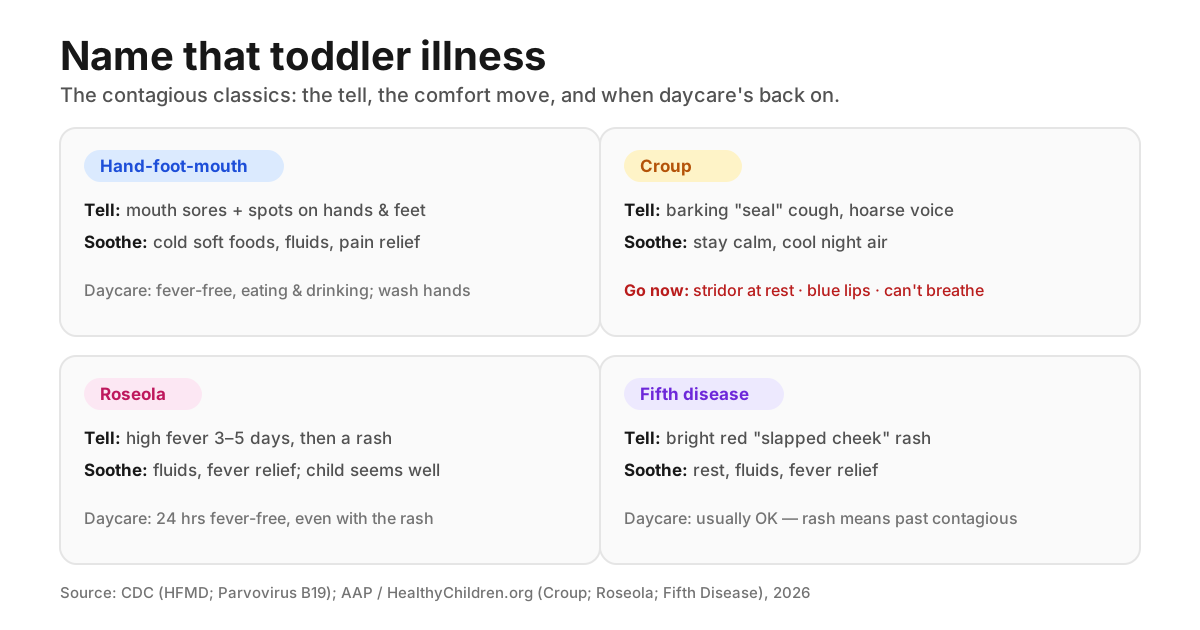
Toddlerhood is a parade of low-grade plagues. Your kid starts daycare, and suddenly there's a barking cough at midnight, a fever with no other symptoms, blisters on the feet, or a face so red you wonder who slapped them. Most of these are textbook viral illnesses with names that sound scarier than they are — and the real skill is recognizing them, knowing the one comfort move that helps, and spotting the rare red flag that means it's time to act.
This is your scannable field guide to four classics: hand-foot-mouth disease, croup, roseola, and fifth disease. For each one: the tell, what soothes it, and the "is my kid still contagious?" answer that tells you when daycare is back on the table.
What the science says: these are viruses, and viruses run their course
All four of these are caused by viruses, which means three things are true. First, antibiotics don't help — they work on bacteria, not viruses. Second, the treatment is almost always supportive care: comfort, fluids, rest, and fever relief while the immune system does the work. Third, they're contagious, but each on its own timeline, which is why the back-to-daycare rules differ.
One tool covers fever and pain across all of them: acetaminophen (and ibuprofen for kids 6 months and up), dosed by weight, not age. We walk through doing that safely in infant medication dosing safety. And one rule overrides every illness here: a fever of 100.4°F (38°C) or higher in a baby under 3 months is always an emergency — call right away. See newborn fever: when to worry.
Now, the lineup.
Hand-foot-mouth disease (HFMD)
The tell. It usually opens with a fever and sore throat, then the signature combo: painful sores or blisters in the mouth and a rash of small red spots or blisters on the hands, feet, and often the buttocks or around the diaper area. The mouth pain is frequently the worst part — it can make a toddler refuse to eat or drink, and they may drool because swallowing hurts. It's caused by enteroviruses (often coxsackievirus) and is most common in kids under 5.
What soothes it. There's no cure; most kids are better on their own in 7 to 10 days. Focus on hydration and pain control, because the real risk is a child who won't drink. Cold, soft, bland foods go down easiest — think yogurt, smoothies, applesauce, popsicles. Skip anything acidic, salty, or crunchy (citrus, chips) that stings raw mouth sores. Acetaminophen or ibuprofen helps the pain. Watch wet diapers as your dehydration gauge — if your child stops peeing, has no tears, or seems lethargic, call your pediatrician. If a child won't drink at all and is heading toward dehydration, that's a reason to be seen.
Still contagious? Most contagious in the first week, but the virus can linger in stool for weeks, so diligent handwashing — especially after diaper changes — keeps it from sweeping the household. Follow your daycare's policy; generally a child stays home while they have a fever, are drooling from mouth pain, or can't control their saliva, and can return once the fever is gone and they can eat and drink comfortably.
Croup — the seal-bark cough
This is the one that scares parents at 1 a.m., so let's be direct about it.
The tell. Croup is a viral swelling of the upper airway (the voice box and windpipe). The hallmark is a harsh, barking cough that sounds exactly like a seal, usually with a hoarse voice. It tends to be worse at night. In more significant croup, you'll hear stridor — a high-pitched, coarse, musical sound as your child breathes in. It typically affects kids 6 months to 5 years and is most common in fall and winter.
What soothes it. Most croup is mild and gets better over 3 to 5 days. The single most useful thing you can do during a scary coughing fit is keep your child calm — crying and panic tighten the airway and make the breathing worse, so a steady voice and cuddles genuinely help. Cool night air or sitting in a steamy bathroom are time-honored tricks; many parents feel they help, though studies haven't proven either one, so think of them as comfort measures, not treatments. If symptoms are significant, your pediatrician may prescribe a single dose of a steroid to reduce the airway swelling, which works well.
When it's an emergency — go now. Call 911 or get emergency care if your child:
- Makes a high-pitched or whistling sound (stridor) while resting, not just when coughing or upset.
- Can't speak or make sounds for lack of breath.
- Has bluish lips or fingernails.
- Is drooling or has serious trouble swallowing saliva.
- Is struggling to breathe — sucking in the skin around the ribs or neck, breathing fast, or clearly working hard for air.
These signs can also point to more serious airway problems, so they always warrant emergency evaluation rather than waiting it out.
Roseola — high fever, then a rash
The tell. Roseola loves to confuse parents because the two main symptoms don't overlap in time. First comes a high fever — often 102°F to 105°F — for 3 to 5 days, frequently with no other obvious cause. Then, just as the fever breaks, a splotchy pink or red rash appears on the trunk and spreads to the neck, arms, and legs. The giveaway: most kids with roseola seem surprisingly well and playful despite the high fever, and the rash shows up after the fever is already gone. It's caused by human herpesvirus 6 and typically hits babies 6 months to 2 years old.
What soothes it. Supportive care — fluids and acetaminophen or ibuprofen for comfort during the fever phase. The rash itself doesn't itch or hurt and needs no treatment; it fades on its own.
A note on febrile seizures. Because roseola causes such high fevers, it's one of the more common triggers of a febrile (fever-related) seizure in this age group. They're frightening to witness but are usually brief and harmless. Still, any first seizure should be evaluated — call your pediatrician or 911. And call sooner if a feverish child is hard to wake, very sleepy, breathing strangely, or showing signs of dehydration.
Still contagious? Roseola spreads through coughing and sneezing. Once your child has been fever-free for 24 hours, they can return to daycare — even if the rash is still there.
Fifth disease — the "slapped cheek" rash
The tell. Fifth disease (parvovirus B19) often starts with mild, cold-like symptoms — low fever, runny nose, tiredness. Then comes the headline: a bright red "slapped cheek" rash across both cheeks, sometimes followed by a lacy, blotchy rash on the arms, legs, and trunk that can come and go for a couple of weeks, often more visible when your child is warm.
What soothes it. It's usually mild and clears on its own. Supportive care — rest, fluids, and acetaminophen for any fever or aches — is all most kids need.
Still contagious? Here's the reassuring twist: a child is most contagious in the days before the rash appears, when it just looks like a cold. Once the slapped-cheek rash shows up, they're generally no longer contagious — which is why kids with the rash usually don't need to stay home from daycare. (One important exception: parvovirus B19 can be risky in pregnancy, so let a pregnant caregiver or teacher know there's been a case so they can check with their own provider.)
The back-to-daycare cheat sheet
The general return-to-care rule across illnesses: fever-free for 24 hours without fever-reducing medicine, eating and drinking normally, and well enough to join the day. Layered on top:
- HFMD: Home while feverish, drooling from mouth pain, or unable to control saliva; return once comfortable and eating. Keep washing hands — stool stays contagious for weeks.
- Croup: Return once the breathing is comfortable, the fever is gone for 24 hours, and your child is back to normal activity.
- Roseola: Return once fever-free for 24 hours, even if the rash remains.
- Fifth disease: Usually no exclusion needed — by the time the rash appears, the contagious window has passed.
Always check your specific daycare's policy, since some have stricter rules than the medical minimum.
Keeping a quick log of when the fever started, when the rash appeared, and how feeds and wet diapers are going turns a blur of sick days into a clear timeline — useful for your pediatrician and for spotting whether things are improving. You can jot it in the TinyWins app between cuddles.
When to call, no matter the illness
Trust the pattern, but call your pediatrician — or seek emergency care — for any of these, regardless of which virus you suspect:
- Trouble breathing: stridor at rest, fast or labored breathing, the skin pulling in around the ribs or neck, grunting, or bluish lips (call 911).
- A fever of 100.4°F (38°C) or higher in a baby under 3 months — always urgent.
- Signs of dehydration: far fewer wet diapers, no tears, dry mouth, or unusual lethargy.
- A stiff neck, a rash that doesn't fade when you press on it (non-blanching), a first seizure, or a child who is very hard to wake or seems extremely unwell.
- A fever lasting more than about 5 days, or symptoms that keep getting worse instead of better.
Most of these toddler illnesses are a few rough days and then a clean recovery. Knowing the four classics on sight means you can skip the panic, reach for the right comfort, and save your worry for the genuine red flags — which, thankfully, are rare. For the broader picture on infant respiratory illness, see our guide to colds, RSV, and the cough that won't quit.
This article is educational and not medical advice. Always check with your pediatrician/provider.