It's the question that sneaks up on you around the time your baby finds their own hands: am I creating a monster? The pacifier that buys twenty minutes of peace, the thumb that finds the mouth at every nap, the ratty stuffed rabbit your toddler can't sleep without — somewhere a voice (probably a relative) is warning you they'll need braces and therapy. Here's the reassuring truth: sucking and clinging to a comfort object are not bad habits. They're normal, healthy ways babies learn to soothe themselves — and the science is on your side for far longer than the worriers suggest.
This guide covers all three: when a pacifier helps (including its real role in safe sleep), how and when to wean paci and thumb before they affect the teeth, and why a lovey is healthy development rather than something to break.
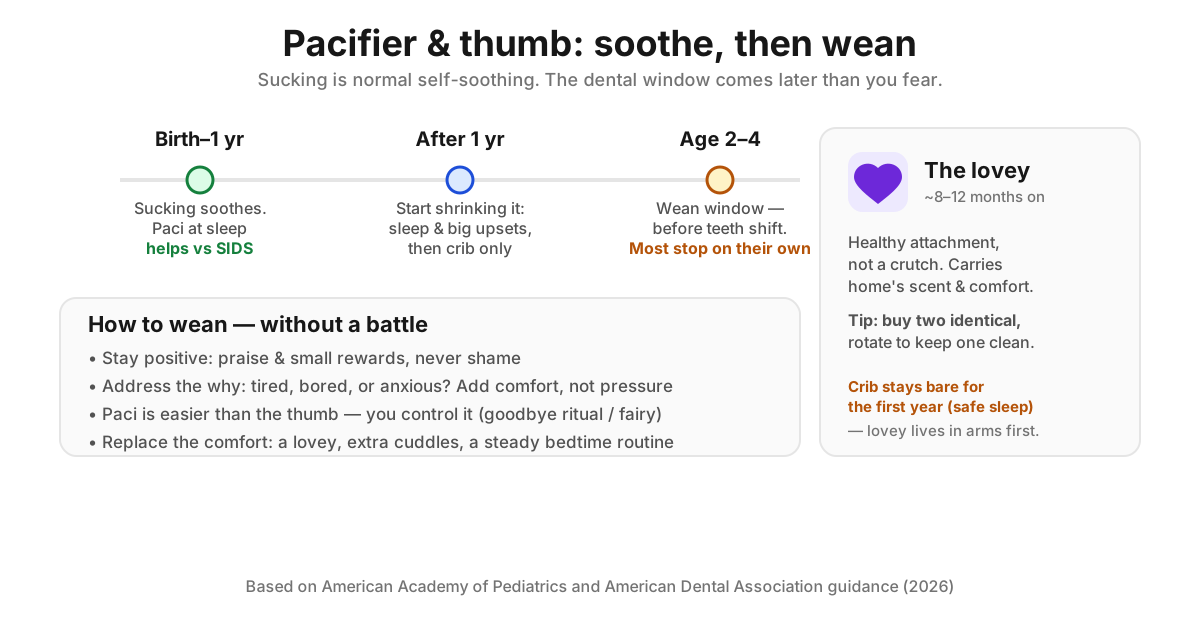
Why babies suck — and why that's a good thing
Sucking isn't just for feeding. Babies have a powerful, built-in non-nutritive sucking reflex — sucking purely for comfort — and it's one of the first tools they have to calm down. Many suck their thumbs in the womb. So when your newborn works a pacifier or finds a fist, they're not forming a vice; they're doing exactly what their nervous system is wired to do to regulate stress, ease into sleep, and feel okay.
That self-soothing skill matters: a baby who can settle themselves a little is building the foundation of independent sleep and emotional regulation. Whether it comes from a pacifier, a thumb, or eventually a beloved blanket, the underlying instinct is healthy.
The pacifier's other job: it protects sleep
Here's the part many parents don't know. The American Academy of Pediatrics recommends offering a pacifier at naptime and bedtime in the first year, because pacifier use at sleep is associated with a lower risk of SIDS (sudden infant death syndrome). The pacifier earns its keep at sleep — it's part of the safe-sleep toolkit, not working against it.
A few practical notes from the AAP:
- If you're breastfeeding, wait until nursing is well established — usually around 3–4 weeks — before introducing a pacifier, so it doesn't interfere with the latch.
- Offer it, don't force it. Put it in at sleep; if it falls out once your baby is asleep, you don't need to pop it back in. A baby who refuses a pacifier is fine too.
- Don't dip it in anything sweet, and don't tie it on a cord around the neck (a strangulation risk).
- A pacifier is the only thing that belongs in the crib at sleep — everything else (blankets, toys, bumpers) stays out for the first year. More on that in our safe sleep ABCs.
So in the first year, the pacifier is a feature, not a bug. Weaning comes later.
When sucking starts to matter for the teeth
The fear driving most pacifier and thumb anxiety is dental, and it deserves a straight, sourced answer rather than a scary one. Both the AAP and the American Dental Association say the same thing: prolonged, frequent, vigorous sucking can begin to affect the shape of the mouth and how the teeth line up — but the concern kicks in roughly after age 2–4, and especially once the permanent front teeth start to come in.
Two nuances take a lot of pressure off:
- Intensity matters more than presence. A child who passively rests a thumb in their mouth is far less likely to cause changes than one who sucks hard and constantly. Gentle is low-risk.
- Stopping in time usually fixes it. If your child gives up the habit before the permanent front teeth erupt, any changes to the bite from baby teeth typically self-correct.
The ADA notes that most children stop on their own between ages 2 and 4, often nudged by being around other kids. There's a window, it's wide, and a paci-loving one-year-old is nowhere near it.
Weaning the pacifier (the easier one)
The pacifier has one big advantage when it comes to weaning: you control it, which makes it generally easier to phase out than a thumb. A gentle, gradual approach that works for many families:
- Shrink the territory first. Limit the pacifier to sleep and genuine meltdowns, then to the crib only, so it's no longer an all-day fixture.
- Pick your moment. Aim for a calmer stretch — not the week you start daycare, move, or welcome a new sibling. After the first birthday and before age 2–4 is the typical target.
- Choose a method and commit. Some families go cold turkey and ride out a few rough nights; others use a goodbye ritual — the "paci fairy" who trades pacis for a small gift, or "mailing" them to a new baby. The ceremony helps a toddler feel like a participant rather than someone losing something.
- Replace the comfort. Offer extra cuddles, a consistent bedtime routine, and — perfect timing — a lovey to fill the soothing role the pacifier used to play.
Above all, keep it positive. Praise and small rewards work; shaming, scolding, and "you're a big kid now, that's a baby thing" do not. This is a developmental transition, not a discipline issue — much like the patient, no-shame approach in our toddler tantrums guide. Logging how the first paci-free nights actually go in your TinyWins journal helps you see the real trend through the sleep-deprived fog, so you don't abandon a plan that's quietly working.
Weaning the thumb (the trickier one)
The thumb is harder precisely because it's always attached — there's no fairy who can take it away. The good news, again, is that most kids quit on their own between 2 and 4. When you do want to help it along, the ADA's advice is gentle and need-focused:
- Notice and praise the not-sucking. Catch your child not sucking and offer warm, specific praise. Positive reinforcement beats correction.
- Address the why. Kids suck most when they're tired, bored, anxious, or seeking comfort. Meeting that underlying need — more downtime, more reassurance, a hug — does more than any deterrent.
- Add gentle reminders, not punishments. A bandage on the thumb or a sock over the hand at night can serve as a no-shame nudge for a child who wants to stop.
- Loop in the child (and, for older kids, the dentist). Let an older child help choose the approach so they're invested. If thumb-sucking persists, a dentist can offer a bitter-tasting coating or, rarely, a small oral appliance.
- Skip the nagging. Constant reminders and pressure tend to entrench the habit by turning it into a stressful battle — which, ironically, is a reason to suck.
If the thumb is still going strong when the permanent teeth are due (around age 5–6), that's the point to bring it up with your dentist, rather than worrying about it at two.
The lovey: healthy attachment, not a crutch
Somewhere between about 8 and 12 months, lots of babies adopt a transitional object — a particular blanket, a stuffed animal, a soft toy — and become deeply, hilariously devoted to it. Far from a worry, the AAP is clear that a lovey is a normal, healthy part of a child's emotional support system, not a sign of insecurity or weakness.
Here's the mechanism, and it's lovely: the object carries your child's scent and the comfort of their room, so it becomes a portable piece of "everything is okay" that helps them bridge the gap from depending on you to soothing themselves — at bedtime, at daycare drop-off, in a strange new place. There's no reason to discourage it, and you can even build it into the bedtime routine on purpose.
Two practical tips:
- Buy a backup (or three). The AAP's single best lovey tip: get two identical comfort objects and rotate them so one's always clean — and a lost lovey isn't a five-alarm catastrophe. Start rotating early, before your child can tell the difference, or they may reject the impostor.
- Mind safe sleep. A lovey is a daytime-and-arms object in the early months. For at least the first year, the crib stays bare — no blankets, pillows, bumpers, or stuffed toys, because soft objects raise the risk of suffocation and SIDS. The lovey can join sleep only once your baby is well past the bare-crib stage your pediatrician confirms is safe; until then it lives in the stroller and the goodbye hug.
A child with a beloved blanket isn't a child who's failing to grow up. They're a child who found a tool for managing big feelings — which is, after all, the whole point.
When to check in with your pediatrician or dentist
Most of this needs patience, not a professional. But it's worth a conversation if:
- Sucking is still strong and frequent past about age 4, or once the permanent front teeth are coming in — ask your dentist whether it's affecting the bite.
- You notice changes to the bite or the roof of the mouth, or speech changes you're wondering about.
- The sucking seems tied to distress rather than ordinary comfort — anxious, around-the-clock sucking is worth raising with your pediatrician.
- You're stuck: gentle weaning has become a daily battle, and you'd welcome a fresh, low-stress plan.
There's no prize for the earliest weaner, and no shame in a four-year-old who still loves a paci at bedtime — but the window does close, and a calm professional nudge near it is reasonable.
The bottom line
Sucking and security objects are healthy self-soothing, not bad habits. A pacifier even helps protect sleep in the first year. The dental concern is real but later than you fear — roughly age 2–4, and especially once permanent teeth arrive — and most kids wean themselves in that window. When you do help, the playbook is the same for all three: stay positive, address the underlying need, replace the comfort, and never shame. And a treasured lovey isn't a crutch to break — it's your child building the very skill you want them to have. (Just keep it out of the crib until safe-sleep age, and buy the backup.)
This article is educational and not medical advice. Always check with your pediatrician/provider.