Your toddler is on the kitchen floor, sobbing, because you peeled the banana they asked you to peel. Nothing about this is logical — and that's the point. Tantrums aren't a discipline failure or manipulation. They're neurology.
Understanding what's happening in a melting-down toddler brain changes what you do about it — and the evidence-backed playbook is simpler (and kinder) than most discipline advice.
What's actually happening in the brain
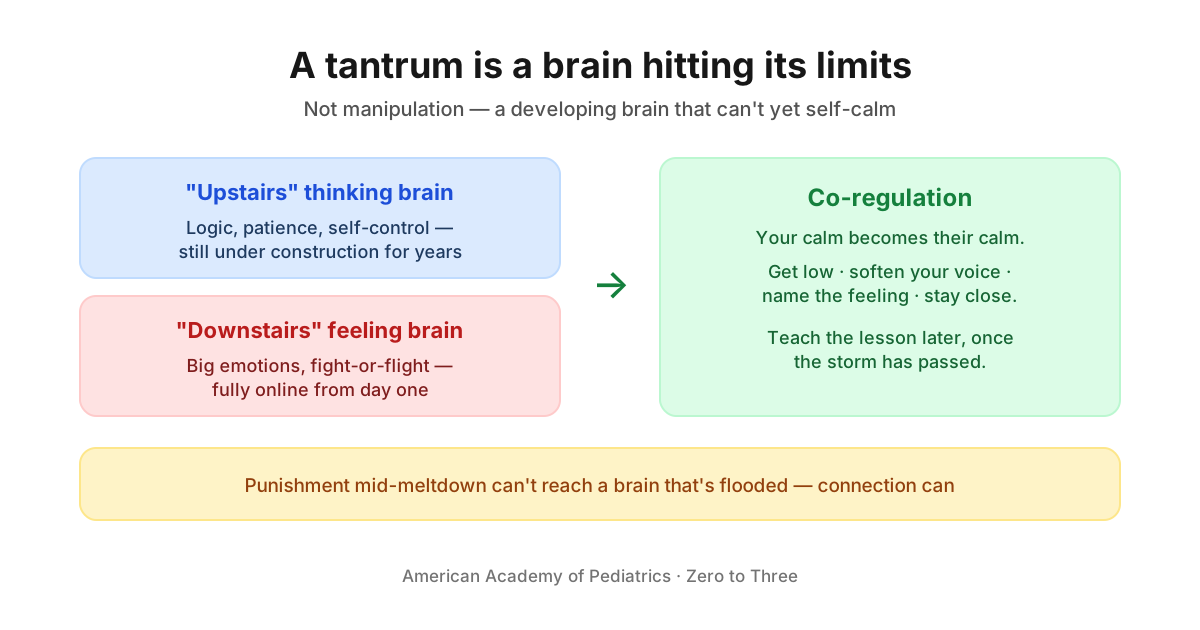
The emotional centers of the brain — the structures that generate fear, frustration, and anger — are up and running early in life. The prefrontal cortex, the region that regulates those emotions, plans, and applies the brakes, is one of the last parts of the brain to mature. As the AAP explains, this region develops across childhood and isn't fully wired until early adulthood.
So a toddler in meltdown has, quite literally, a gas pedal without functioning brakes. They aren't choosing to lose control — they don't yet own the machinery that produces control.
Add the classic toddler bind described by ZERO TO THREE: big desires, strong opinions, and language skills that lag far behind what they want to communicate. (It's no coincidence tantrums peak right as language is exploding but still limited.) Frustration with no words for it has exactly one exit: the floor.
The takeaway: per the American Academy of Pediatrics, tantrums are a normal part of development, most common between ages 1 and 3 — not a sign of bad parenting or a bad kid.
Co-regulation: borrowing your brain
Because toddlers can't yet self-regulate, they regulate through the adults around them — a process researchers call co-regulation. Your calm nervous system is the external brake their brain hasn't built yet.
In practice, co-regulation during a tantrum looks like:
- Stay calm and stay close. Lower your voice instead of raising it. The AAP advises that keeping your own temper is step one — a second escalated person never de-escalates the first.
- Keep them safe, say little. Mid-meltdown, the reasoning brain is offline. Move them away from hazards; save the lecture (there shouldn't be one anyway).
- Name the feeling. "You're so angry. You really wanted the red cup." Labeling emotions is one of the most consistently recommended tools — ZERO TO THREE highlights it because it builds the emotional vocabulary toddlers are missing, and feeling understood lowers the temperature.
- Hold the limit anyway. Empathy and boundaries are not opposites. "You're sad we left the park. We still had to leave." Giving in to end the show teaches that meltdowns work (NHS).
- Reconnect after. Once the storm passes, offer comfort. Briefly name what happened, then move on — no extended post-mortem with a two-year-old.
Why punishment mid-meltdown doesn't work
It's tempting to treat a tantrum as defiance that needs consequences. The evidence says otherwise.
The AAP's policy statement on effective discipline is unambiguous: spanking, yelling, and shaming are ineffective at teaching self-control and are linked to worse behavior over time, along with negative effects on development. And mid-tantrum specifically, punishment targets a brain state the child cannot exit on command — you can't punish a toddler into having a mature prefrontal cortex.
What works instead, per the AAP's discipline guidance, is the boring-but-effective combination: notice and praise the behavior you want, stay consistent on limits, and treat the meltdown itself as weather — something to be ridden out safely, not negotiated with or avenged.
What not to do (the short list)
For balance, the moves that reliably make tantrums worse:
- Matching their volume. Yelling adds a second dysregulated nervous system to a room that already has one.
- Reasoning mid-storm. "We talked about this" bounces off a flooded brain; save the words for calm moments.
- Caving on the trigger. Handing over the cookie ends this tantrum and schedules the next twelve (NHS).
- Punishing the emotion itself. Consequences for dangerous actions (hitting, throwing) can be appropriate later; punishing a child for feeling overwhelmed teaches them to hide feelings, not manage them (AAP).
Preventing the preventable ones
You can't prevent all tantrums (nor should you — frustration is how regulation gets practiced). But the NHS and AAP point to a few reliable pressure-release valves:
- Guard sleep and food. A huge share of meltdowns are just hunger or tiredness wearing a costume. (Mealtime battles deserve their own playbook — see our no-battle guide to picky eating.)
- Offer small choices. "Red cup or blue cup?" feeds the autonomy drive safely.
- Give transition warnings. "Two more slides, then home" beats an ambush.
- Catch them being good. Specific praise for staying calm builds the skill you actually want.
- Watch the triggers you control. Overstimulation, rushed mornings, errands at nap time — and for some kids, the transition off screens (more on screens by age here).
Many parents find it helps to track patterns — when tantrums cluster, what preceded them — and to get age-matched guidance as their child's regulation skills develop. That's part of what we built TinyWins for: short, evidence-based steps matched to the stage your child is actually in.
When to talk to your pediatrician
Most tantrums, even spectacular ones, are typical development. The AAP suggests checking in with your pediatrician if:
- Tantrums regularly intensify or increase after age 4
- Your child injures themselves or others, or destroys property during outbursts
- Tantrums come with breath-holding to fainting, or you're worried about events during the episode
- There are accompanying concerns like language delay or loss of skills
- You feel persistent anger, or worry about your own responses — asking for support is good parenting, not failure
The long game
Every ridden-out tantrum is, oddly, a rep. The toddler who melts down over banana integrity today is practicing — with your calm as scaffolding — the regulation circuitry they'll use at five, fifteen, and fifty. You're not just surviving the meltdown. You're building the brakes.
This article is educational and not medical advice. Always check with your pediatrician/provider.