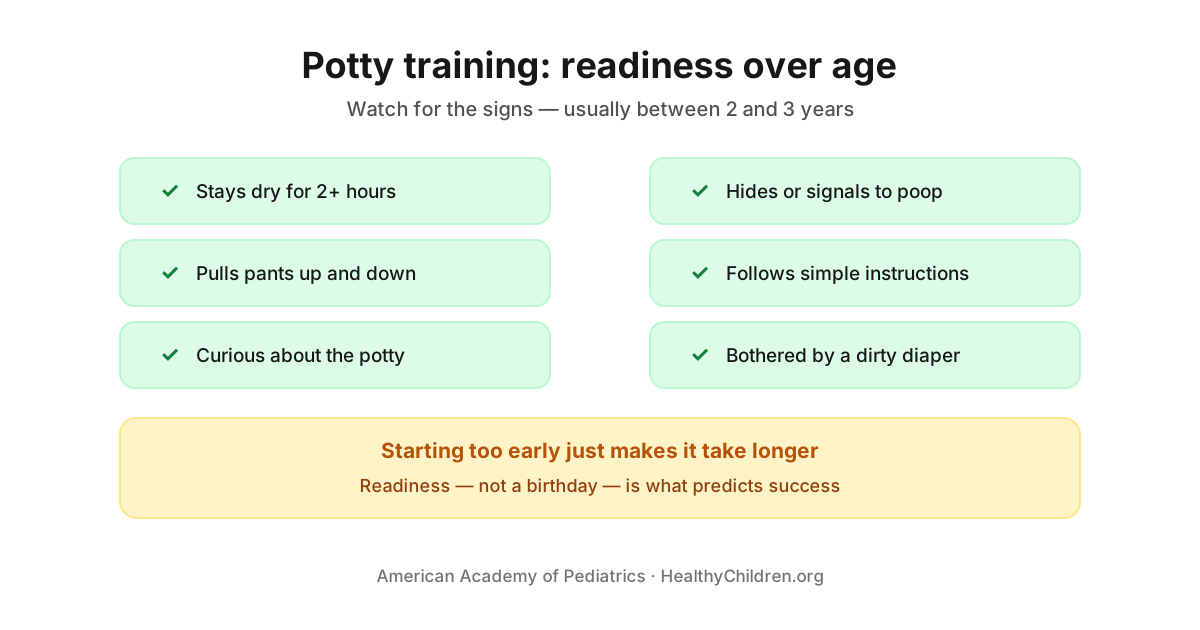
Ask five relatives when to start potty training and you'll get five confident, contradictory answers. The research is calmer than the group chat: readiness matters far more than age, and starting before your child is ready tends to make the whole process longer — not shorter.
Here's what pediatricians actually look for, and how to make the transition out of diapers as low-drama as possible.
There is no magic age
According to the American Academy of Pediatrics, the average age toilet training begins in the United States is between 2 and 3 years, and most children are bowel and bladder trained by age 4.
That's a wide window on purpose. The skills potty training depends on — bladder control, body awareness, language, the motor ability to get to a potty and manage clothing — come together at different times for different kids. ZERO TO THREE notes that most children develop physical control over bladder and bowel by around 18 months, but physical control is only one piece. The interest, understanding, and cooperation pieces usually arrive later.
A child who trains at 22 months and a child who trains at 3½ both end up exactly the same place: a kid who uses the toilet.
The readiness signs that actually matter
The AAP's readiness checklist is about observable skills, not birthdays. Watch for a cluster of these:
Body signals
- Stays dry for at least 2 hours at a time, or wakes dry from naps — a sign the bladder can hold and release on a schedule (ZERO TO THREE)
- Has fairly predictable, formed bowel movements
- Notices when they're going — pausing play, squatting, hiding behind the couch — or tells you right after
Communication and thinking signals
- Can follow simple instructions like "put the cup on the table"
- Has words (or signs) for pee, poop, and potty — they don't need to be polite words
- Dislikes the feeling of a wet or dirty diaper and may ask to be changed
Motor and motivation signals
- Can walk to the potty, sit on it, and get up without help
- Can pull pants down and up with minimal assistance
- Shows interest — follows you to the bathroom, wants to flush, asks about underwear
You don't need every box checked. But if most of these are missing, the kindest and fastest move is usually to wait a few weeks and look again.
Why pressure backfires
This is the part worth bolding for the grandparents: pushing a child who isn't ready doesn't speed things up.
The AAP's guidance on creating a toilet training plan emphasizes following the child's pace, because pressure, shaming, and punishment around toileting are linked to:
- Resistance and power struggles — toileting is one of the few things a toddler fully controls, and they know it
- Stool withholding, which can cause constipation and make pooping genuinely painful — turning a behavioral hiccup into a medical one
- Longer overall training time and more accidents
Cleveland Clinic makes the same point: stay calm about accidents, never punish them, and if it's turning into a battle, stop and try again in a few weeks. A pause isn't failure — it's strategy.
A low-pressure way to start
When the readiness signs are there:
- Put a potty where life happens. The bathroom is the goal, but a potty in the living area lowers the barrier early on.
- Build casual exposure. Let them sit on it clothed, read a book there, watch you use the toilet. No agenda.
- Anchor potty sits to routine moments — after waking, before bath, after meals (when the gut naturally gets moving).
- Dress for success. Elastic waistbands only. Overalls are the enemy of potty training.
- Praise effort lightly, treat accidents boringly. "You sat on the potty!" beats a parade; "Oops, pee goes in the potty — let's get dry clothes" beats a lecture (AAP).
Many families find it easier to track readiness signs as they appear rather than guessing from memory — that's exactly how the milestone checklists in TinyWins work: check off what your child actually does, and the next steps unlock when they're relevant.
What's normal after training starts
- Accidents for months. Especially when absorbed in play. This is normal, not regression.
- Daytime first, nighttime much later. Night dryness depends on bladder maturation and a hormone shift — many children wear nighttime pull-ups well past their fourth birthday, and Cleveland Clinic notes bedwetting beyond that can still be developmentally normal.
- Poop later than pee. Some trained kids ask for a diaper to poop for a while. Allow it; it prevents withholding.
- Regression during upheaval. New sibling, new house, starting daycare — toileting is often the first skill to wobble and the first to come back.
Three myths worth retiring
- "Earlier-trained kids are smarter/better-parented." Training age reflects readiness timing, not intelligence or parenting quality — and the AAP notes that children with later, readiness-based starts often train faster once they begin.
- "You must finish in a weekend." Intensive methods work for some ready kids, but there's no evidence a deadline helps — and a failed "boot camp" can sour a child on the whole project.
- "Going back to diapers means failure." Pressing pause when a child resists is the explicitly recommended move, not a defeat. Most pauses end with a much smoother second attempt.
When to talk to your pediatrician
Check in with your provider if:
- Your child shows no interest or progress well past age 3
- They don't seem to sense when they're going
- Stools are painful, hard, or infrequent — chronic constipation both mimics and causes training trouble
- A trained child regresses for more than a few weeks
- Toileting battles are dominating family life
Most of the time the answer is reassurance plus a small tweak — but constipation in particular is worth catching early, because treating it often unsticks everything else.
Potty training is a milestone, not a race — and like tantrums and picky eating, it goes better when parents work with toddler development instead of against it. (And no, your child's kindergarten application does not ask what age they trained — readiness for school is about entirely different skills.)
This article is educational and not medical advice. Always check with your pediatrician/provider.